

The internet is a vast ocean of data that can make our lives easier and more enjoyable. However, accessing this data can be challenging, as websites impose various restrictions and security measures, resulting in numerous streaming and browsing issues.
Proxies provide an excellent solution to these browsing and streaming problems, with SOCKS5 proxy servers quickly becoming one of the most used types due to their advantages, speed, and versatility.
In today’s article, we’ll explore proxy servers and how they work, and dive deeper into SOCKS5 proxies. We’ll compare them to other proxy servers, examine their differences, and explore the benefits you can expect if you buy a SOCKS5 proxy.
Proxy Servers Explained
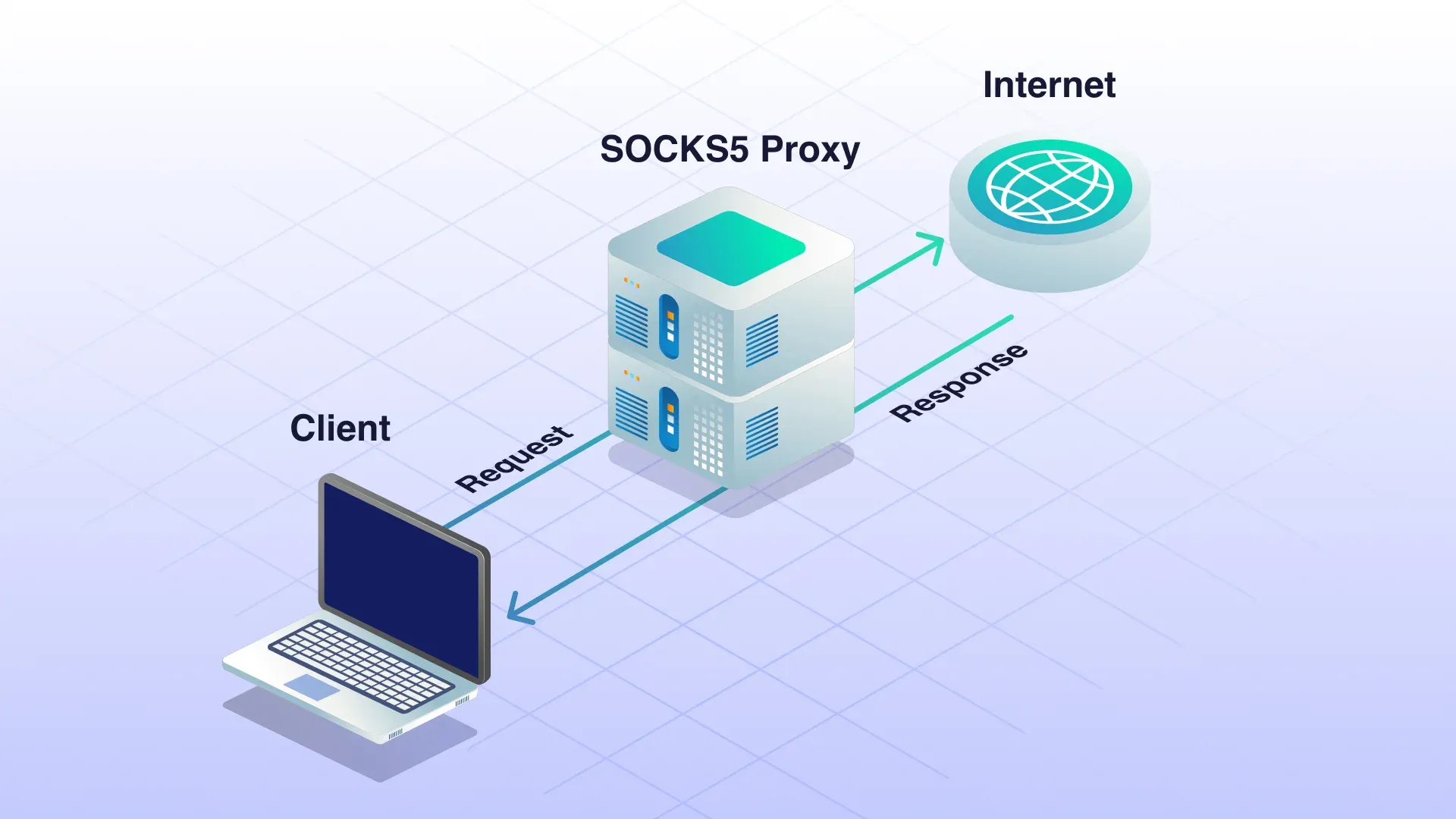
In networking, a proxy server takes on the role of a middleman, acting as a gateway computer between the user on one end and the website they’re accessing on the other.
As gateways, proxies protect our access to the digital landscape, enhancing our anonymity and helping us bypass numerous security measures that more and more websites are implementing.
Proxy servers hide the user’s IP address, generating another random one before connecting to the user’s final destination – the website. The secondary IP helps hide the user’s geographical location and protects them from malicious actors.
Additionally, different proxy servers offer additional advantages, and the SOCKS5 proxy stands out as a type with numerous benefits.
How do SOCKS5 Proxies Differ from Other Proxy Types?
Before examining differences from other proxy servers, we must dive into the SOCKS protocol and see what the “5” stands for. Namely, SOCKS, short for Socket Secure, is a network protocol that primarily handles traffic-intensive client-server requests made with a proxy server.
SOCKS5 is the latest iteration and the most significant upgrade of the SOCKS protocol. Compared to the previous SOCKS4 version, version 5 offers support for authentication methods, enhanced security, and compatibility with a wide range of network applications.
It makes buying a SOCKS5 proxy an excellent decision, as they’re versatile, fast, and excellent for all browsing needs.
It’s also worth noting that networks have seven layers of protocols, with many proxies, known as HTTP proxy servers, functioning as Layer 7 apps and only handling HTTP and HTTPS requests.
SOCKS5 proxy servers are different, as they’re a Layer 5 protocol, meaning they’re not limited to these two types of requests. Instead, they can handle various protocols, including HTTP, SMTP, FTP, TCP, and UDP.
Top 5 Benefits of Using a SOCKS5 Proxy
While all proxy servers offer advantages over a standard, unprotected connection, SOCKS5 proxies provide even more benefits. Here are the top five:
- Bypassing Internet Roadblocks. Websites employ numerous request-limiting features to control internet traffic, maintain user logs, and block suspicious IP addresses. While frustrating, these measures are often necessary to prevent non-compliant scrapers from overloading or slowing down websites. Yet, SOCKS5 proxies can quickly bypass these blocks by changing the user’s IP.
- Overcoming Geo Restrictions. Websites often restrict content based on geolocation and prohibit users from one country from accessing the local website version in another country. For example, streaming services often have varying movie and TV show collections for different countries. SOCKS5 proxies effortlessly bypass these restrictions, allowing users to watch what they want.
- Top Internet Connection Speeds. The latest iteration of the SOCKS protocol, SOCKS5, has gained a massive advantage – speed. It directly results from accessing a connectionless communication port called User Datagram Protocol, or UDP, instead of TCP. By routing traffic through UDP, internet packets are transferred more efficiently, resulting in a faster SOCKS5 connection. However, it is essential to note that UDP is less reliable than TCP by design.
- Increased P2P Performance. Peer-to-peer sharing involves a network where devices act as clients and servers. There is no centralized server to which you connect, and content is shared directly between users. In this type of sharing, SOCKS5 proxies can efficiently handle multiple connections (both TCP and UDP), thereby increasing download and upload speeds on P2P platforms.
- Enhanced Application Versatility. As a layer 5 protocol, a SOCKS5 proxy offers significant advantages compared to HTTP/HTTPS proxies, which are layer 7 applications. A SOCKS5 proxy isn’t limited to web browsing and can be used with different programs and services, including file transfers through FTP, secure mail communication through SMTP, and more.
The combination of such features makes buying a SOCKS5 proxy an excellent choice for all your proxy server needs, providing unfiltered access and protecting your privacy.
Conclusion
Proxy servers are an ideal choice for overcoming internet restrictions, enabling users to hide their IP addresses, protect themselves from malicious actors, and maintain their online privacy.
Among many types, SOCKS5 proxies stand out as one of the top choices due to their unique nature and distinct differences from other proxy servers.
When you buy a SOCKS5 proxy, you gain access to a private, reliable, fast connection that can bypass geographic restrictions, overcome numerous website roadblocks, and tremendously increase your connection speed in peer-to-peer networks.
