
The first week on any trading platform tends to shape how a beginner approaches it later, so it helps to plan those days in advance. Pocket Option, a platform that has operated since 2017, lets newcomers start with very small amounts, which makes a structured first week realistic even on a tight budget. This guide splits that week into three stages, from practice to the first real trades and a review at the end. What should happen before the first deposit? Pocket Option’s demo account is the natural starting point for the first two days. It runs on virtual funds…
Author: Richard

Richard
Richard is an experienced tech journalist and blogger who is passionate about new and emerging technologies. He provides insightful and engaging content for Connection Cafe and is committed to staying up-to-date on the latest trends and developments.

I’ll be honest. Back in 2021 when I first started looking into crypto mining, I got excited. Bitcoin was climbing, people were sharing screenshots of earnings, and I thought maybe I could make something happen. Then I saw what mining rigs cost. $3,847 for a decent ASIC miner. Another $600-$800 for a proper power supply. That’s before electricity costs, which would’ve run me $180 monthly. I closed that browser tab fast. But things changed. I’ve spent 8 months testing browser-based mining simulators, and some work better than expected. Places like free mining website RollerCoin let you experience mining mechanics without…

Ask most people what they use an AI assistant for and the answer is “writing emails” or “looking things up.” That is a bit like buying a smartphone and only using it to make calls. A modern assistant can plan, calculate, translate, summarize, debug and explain, and the best ones now do it with the kind of privacy that lets you be truthful about what you actually need help with. Here are nine jobs worth handing over this week, in rough order of how much time they save. 1. Turning a messy week into a plan Paste in everything on…
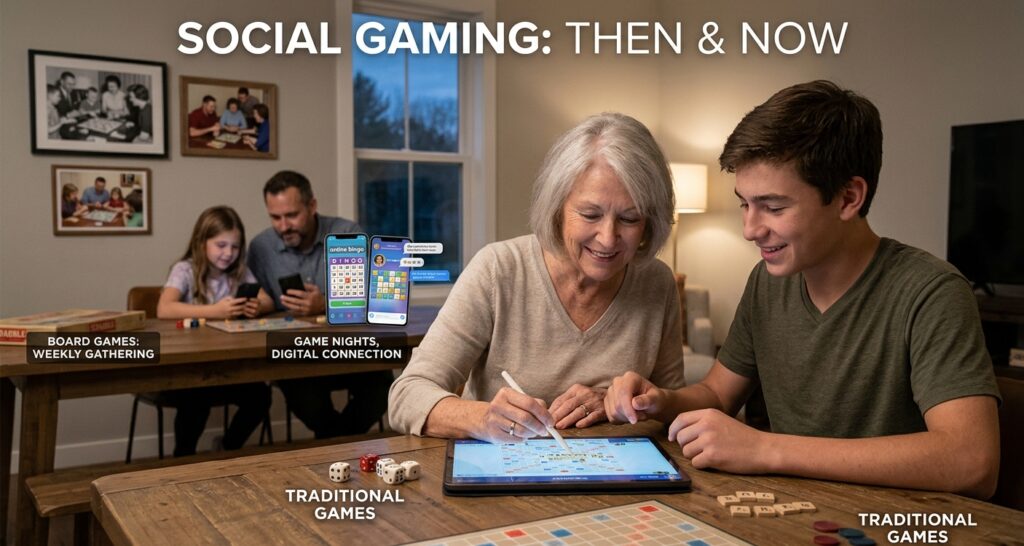
Gaming has changed over the years. While plenty of us still gather around a board game or deal physical packs of cards between friends, a lot of this physical play is increasingly available on our devices. But how did we get here? And what does all the new tech mean for social gaming? Why traditional board games brought people together? Weekly family game nights were once a staple in the calendar. Parents would break out the games board and set up the dice and tokens. For classic games like Scrabble, the rule book and a dictionary were a must, while…
Creating a 3D model traditionally requires learning how to manipulate vertices, edges and surfaces. These skills remain important, but AI-assisted tools now offer beginners another way to start: describing an object in words and generating an initial model. This approach can help creators explore game props, product concepts, digital artwork and printable decorations before they have advanced modelling skills. However, the first generated result is rarely the finished asset. It still needs to be inspected, tested and often edited. The following workflow explains how to move from a basic text prompt to a more usable 3D model. Step 1: Decide…

A product video can lose credibility in a single frame when the product changes shape, the lighting jumps, or the setting no longer matches the opening shot. Viewers may not describe the problem technically, but they notice that the story feels unstable. Consistency is especially important in product marketing because the audience is trying to remember a specific object, interface, experience, or promise. If the visual identity keeps changing, the message becomes harder to trust. That is where Higgsfield AI can become more useful than a one-off clip generator. In VideoGen, teams can create cinematic shots, transform existing footage, and…
A LinkedIn automation tool can look impressive on a feature page and still be the wrong choice. The real difference appears after an account is connected: where the session lives, how activity runs, and how much control users have. These details can affect day-to-day management, especially when teams operate several accounts with different audiences, schedules and outreach goals. For teams comparing platforms, Linked Helper’s guide to the best LinkedIn automation software starts with architecture rather than marketing claims. Cloud platforms, browser extensions, and desktop solutions can all automate outreach, but they create different trade-offs around session handling, IP control and…

A dice roll may look random, but on a crypto casino, several cryptographic values can sit behind the result. This is the principle behind “provably fair” gaming. It gives players a way to check whether a result was altered after a bet. But that proof has clear limits. So, what does provably fair actually prove? Understanding provably fair gaming Provably fair games typically use a server seed, a client seed and a nonce. The casino generates the server seed and keeps it hidden before the bet. The player can choose the client seed, while the nonce changes with each bet.…

Modern businesses depend on digital systems for almost every part of their daily operations. Emails, customer records, cloud platforms, payment systems, and shared documents all make work faster, but they can also create opportunities for cybercriminals. A single compromised account or infected device can cause disruption that reaches far beyond the IT department. Strong cybersecurity does not have to mean building an expensive or overly complicated security system. Instead, businesses can reduce their exposure by putting practical safeguards in place and making security part of everyday working habits. Keep Software and Devices Up to Date Outdated software can leave weaknesses…
Most developers meet residential IPs the same way. A script that pulled data happily from a laptop gets deployed to a cloud VM, and the next morning the logs are full of 403s and challenge pages. Nothing in the code changed. The headers are identical. The only thing that moved is the address the requests come from. That experience is a good starting point, because it shows what an IP address really is to the server on the other end: not just a return address, but a clue about who is knocking. This article covers how that clue is read,…

The modern matchday experience is marked by a specific ritual: statistics on a second screen. No matter the match, your phone is sitting on the sofa, and as a goal goes in, within seconds you can check who scored and fan reactions. But the second screen is much more, as it is the prime point for information, odds, statistics, and communication. The game stays on the big screen, but everything around it moves to the small one. Why did this become the norm? This is the question we will try to answer here. What Is the Second-Screen Experience? The second-screen…

Startups have a lot to deal with. In the early days, it’s easy to handle support queries because they tend to be few and far between. But, once the company starts gaining traction, things become a lot trickier. Eventually everyone has to pitch in to answer calls instead of focusing on building the business. Most companies deal with this by hiring internally, but this may not be the right answer. Finding the right people takes time and the costs of managing an in-house team become prohibitive quite quickly. Outsourcing gives startups another option: an external team can handle some or…

Social entertainment used to need a place and a time. You’d arrange to meet, travel there, and hope everyone remembered. Now, much of that organising happens through the phone in your hand. A message in a group chat, a live comment thread or a reminder from an app can turn a quiet evening into a shared experience in moments. That doesn’t mean digital communities have replaced meeting in person. Far from it. They’ve simply widened the ways we can take part, whether we’re swapping recommendations, following a live event together, joining a hobby group or keeping up with familiar faces…
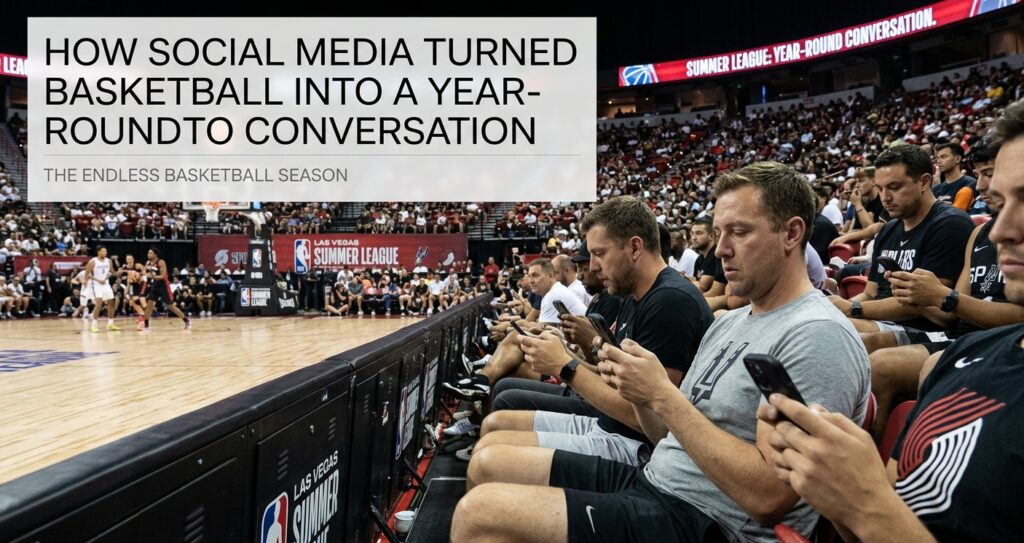
The Finals end in June, the confetti gets swept up, and for a long time that was the signal to move on. Basketball went quiet until October. Open your phone in July now and you’ll find the opposite. Someone is ranking the draft class. Someone else is arguing about a free-agent signing. A rookie’s first pro dunk is being replayed from four angles. The sport doesn’t have an off switch anymore. Social media is the reason, and it has changed how fans connect with each other as much as how they follow the game. The season used to have an…