

Remember when entertainment meant sitting back and watching? Those days feel like a lifetime ago. Now, everything like your favorite streaming app or the way you interact with friends online has a layer of play baked into it.
Gamification, the art of weaving game mechanics into non-game settings, has quietly become the backbone of how we socialize, compete, and stay engaged online.
And it’s not slowing down. The global gamification market is projected to hit roughly $38 billion in 2026, growing at a staggering pace that even industry insiders didn’t see coming a few years back. So what’s driving this? Let’s talk about it.
It’s Not Just Points and Badges Anymore
Early gamification was pretty basic. You’d earn a badge for completing a profile, collect points for logging in daily, maybe climb a leaderboard. It worked, sure, but it also felt mechanical. People caught on fast, and the novelty wore off.
What’s changed is depth. Platforms today are borrowing from role-playing games, narrative design, and social psychology to create experiences that actually mean something to users.
Think about how Duolingo keeps you coming back with streaks and personalized challenges. Or how fitness apps turn a morning jog into a competitive event with your coworkers. The mechanics feel less like a marketing trick and more like a genuine part of the experience.
Studies show that gamified approaches can boost user engagement by 100% to 150% compared to traditional methods. That’s not a small bump. That’s a complete shift in how people interact with content.
Social Casinos Are Leading the Charge
Here’s something interesting that doesn’t get enough attention. Social casino platforms have become testing grounds for some of the most creative gamification in digital entertainment. These aren’t your grandfather’s slot machines translated to a screen. They’re full-blown social ecosystems.
Take Big Pirate, for example. It launched in late 2025 as a narrative-driven social casino where players build and defend pirate island strongholds while competing in daily tournaments and community challenges. The whole thing runs on a free-to-play model, and the emphasis isn’t on isolated gameplay.
It’s on community interaction, collaborative events, and an evolving storyline that keeps people invested. That kind of layered engagement is a far cry from spinning reels and hoping for the best.
This trend reflects a broader truth: people don’t just want to play. They want to belong. When a platform wraps entertainment in shared goals, friendly competition, and progression systems, it taps into something fundamentally human.
Why Community Is the Secret Ingredient?
Gamification works best when it connects people rather than isolating them. Leaderboards are fine, but they only tell part of the story.
The real magic happens when users collaborate toward shared milestones, participate in time-limited events together, or build something as a group.
Social media platforms figured this out years ago with polls, quizzes, interactive stories, and AR filters, all designed to make scrolling feel less passive. In 2026, AR and VR are pushing this further, turning content consumption into active participation.
And it’s not limited to entertainment companies. Brands are getting creative too. QR codes on physical products that trigger mini-games.
Loyalty programs structured like quest chains. Even corporate training has adopted gamified elements, with companies reporting up to 60% higher engagement after introducing game mechanics into onboarding.
The Psychology Behind the Play
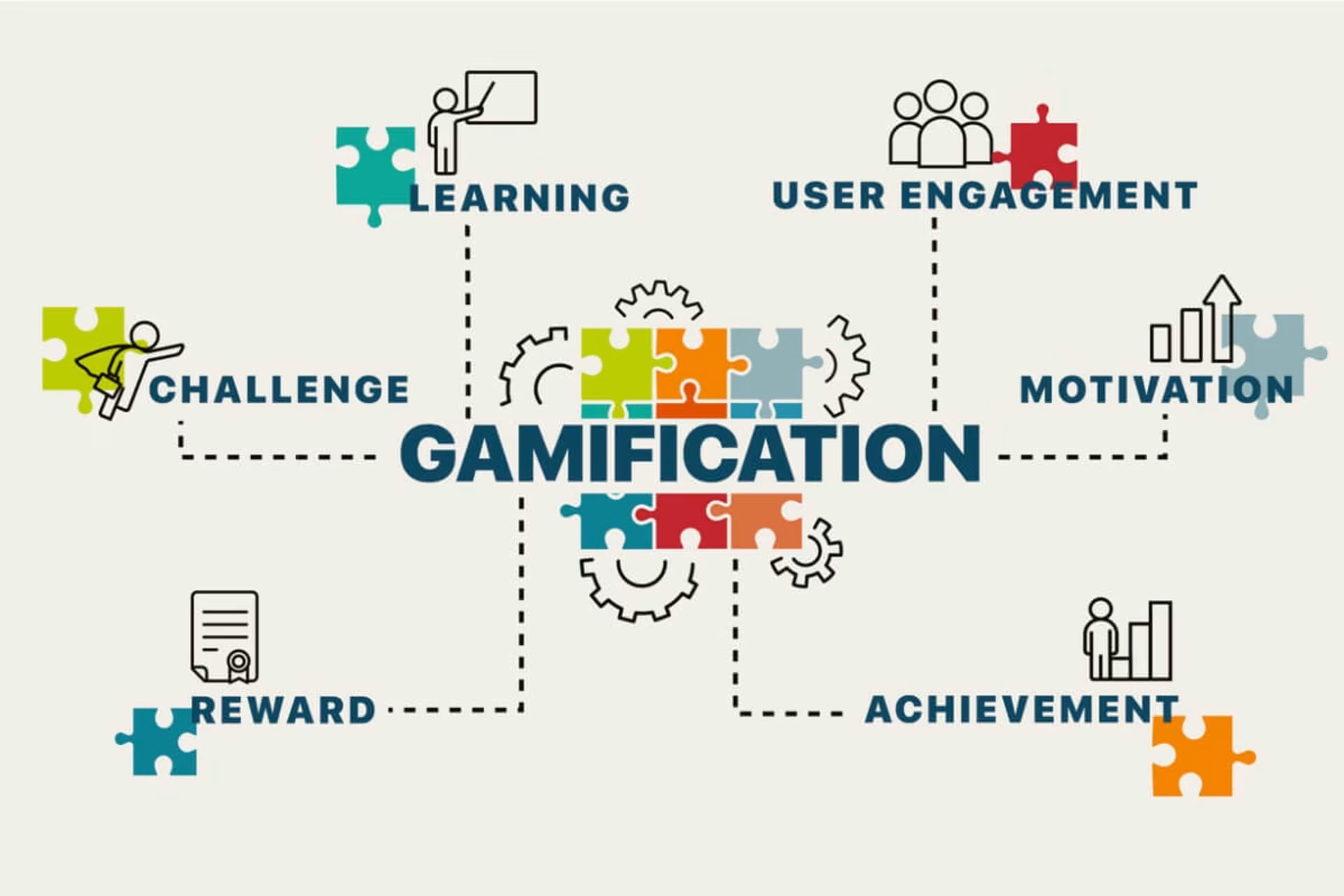
Why does this stuff work so well? It comes down to a few core human drives: competition, achievement, social connection, and a sense of progress.
Gamification taps into all of them at once. When you finish a challenge and see your rank climb, that’s dopamine doing its thing. When you collaborate with strangers on a shared goal, that’s belonging.
But there’s a catch. A 2025 study published found that while gamified elements improve attention and motivation, those gains drop off without continuous innovation. Platforms that rest on their laurels lose their edge fast.
This is why the most successful experiences keep evolving with new challenges, seasonal events, and rotating content.
Where This Is All Heading?
The line between social media, gaming, and entertainment keeps getting thinner. We’re approaching a point where the distinction barely matters. Your social feed is gamified. Your entertainment app has social features. Your workout is a competitive game.
With AI now entering the picture, personalization is about to get sharper. Instead of generic challenges, platforms will tailor experiences to individual behavior patterns and preferences.
What feels fun for you might look completely different from what engages someone else, and the technology is finally catching up to that reality.
Gamification isn’t a trend anymore. It’s the new language of digital entertainment. And if you’re not paying attention to how it’s reshaping the way we connect and play, you’re missing one of the most significant shifts in how humans interact with technology.
