

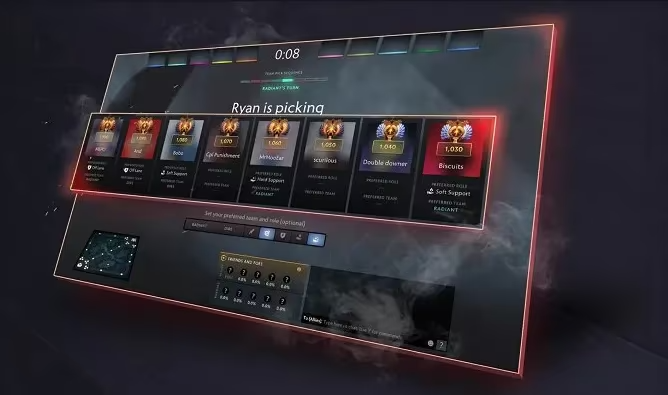
Dota 2 is one of the most complex esports disciplines. Even before the match begins, players need to start thinking in order to choose a quality draft. In major tournaments like DreamLeague, ESL One, or The International, the difference between teams is often determined precisely by the skill of the draft.
That is why the work of the captain is highly valued today, and every professional team wants to have a skilled player in this role.
In this article, we will explain how captains can make or break their teams’ performances at elite tournaments right from the draft stage.
Why Draft Flexibility Wins Championships?
Many players and fans think that individual skill is the main key to victory. However, those who play at the Tier-1 level will easily deny this. Preparation for tournaments includes mechanics training, analysis of statistical data, ban and pick rates, and other indicators.
However, even a large amount of data does not guarantee success if the captain is not ready to adapt. Reading reviews of Dota 2 tournaments and matches on EGamersWorld, you can learn about many situations when a favorite unexpectedly lost due to an unsuccessful draft.
Most often, such moments happen after the release of new patches and the slow adaptation of teams. Some teams reject strong heroes of the patch, trying to play with proven schemes, and some of these decisions end in quick defeats.
Dota 2 draft consists of several stages. First, it is necessary to understand the priorities of the patch, then evaluate the strengths of your own lineup, after which you take into account the style of a specific opponent.
If at least one of these components is ignored, the team ends up with an awkward set of heroes with poor timings or weak map control.
According to Liquipedia Tournaments, teams that have won championships this season demonstrate a high diversity of picks and adapt to the opponent’s draft on the fly. This also allows them to hide their main setups and force opponents to spend bans on secondary characters.
Stubborn Draft Habits That Cost Teams Millions
The most common mistake of a stubborn captain is the unwillingness to give up “comfort” heroes. If a team constantly opens a draft with the same characters, opponents will adjust and pick a counter-pick. Just two correct bans are enough for a team to need to rebuild their entire strategy.
Overestimating one’s own skill is also problematic. Some captains believe that a strong player will win even in an unfavorable matchup. A good example is Tundra Esports, who performed very successfully at the beginning of the season, easily defeating almost all teams.
However, other top teams adapted to their playstyle and drafts, which preceded a series of failures for Tundra Esports at several tournaments.
Another problem arises when a captain completely ignores information from a coach or analyst. Modern staff works on identifying patterns in the opponent’s choices. If these recommendations are not used, a significant part of the preparation loses its meaning.
Elite Captains Adapt Faster Than Everyone Else
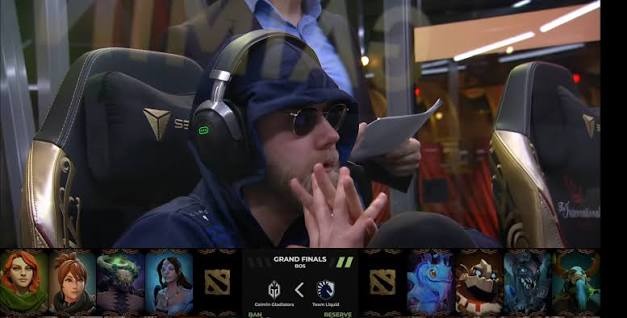
Tier-1 team captains bear a lot of responsibilities. They must be in-game leaders, both in-game and out of it, as well as skilled strategists.
In addition, captains must be able to make quick decisions and even be ready to abandon a developed scheme literally a few minutes before the game starts if they see a better option.
The most well-known captains at the moment are miCKe from Team Liquid, KJ from LGD Gaming, and 33 from Tundra Esports. They are the main support of their teams, and without them, winning would be much more difficult.
It is no less important to properly distribute responsibility within the roster. In some modern teams, the final decision is made after discussions between the captain, coach, and key players.
This approach helps avoid situations where one person determines the team’s structure based on their own preferences.
It is also worth highlighting psychology. If the first draft did not work, it is necessary not to get upset, but to move on to a new plan.
A stubborn captain often repeats almost the same picks, explaining the defeat by individual mistakes. A true leader, on the contrary, admits the problem and makes adjustments on the very next map.
Data, Preparation and Communication Decide the Draft
A quality draft consists of many small details. First of all, players should have a clear pool of heroes that they play well, while at the same time the team must analyze statistics after new patches are released. Even a few percent change in a hero’s win rate can make them effective or, conversely, ineffective.
Next comes preparation for a specific opponent. The coaching staff studies which heroes the opponent most often picks in the first phase, which characters remain unbanned, and which combinations yield the highest win rates. Such information allows for building several alternative scenarios even before the match begins.
It is no less important to maintain open communication during the draft itself. If a player feels that a certain matchup will be too difficult, their opinion must be taken into account. Similarly, a captain may suggest an unexpected counter-pick that has not been previously used by the team.
Therefore, it can be said that preparation for the draft continues throughout the entire tournament. After each match, teams analyze replays, review statistical reports, and evaluate the correctness of decisions.
A captain who is ready to change their opinion after the emergence of new facts gains respect from the team and has a much better chance of leading the team to a championship.
Conclusion
Gathering all the facts together, it can be said that the draft in Dota 2 plays an important role. It is from the draft that the development of all game strategies begins and the team’s tactical preparations are demonstrated. At the professional level, it is the draft that creates the foundation for the entire game.
Stubborn captains often overestimate their own experience, neglecting current statistics, analysts’ work, and meta changes. In contrast, the most successful lineups regularly adapt their approaches, change priorities, and make decisions based on facts rather than habits.
