

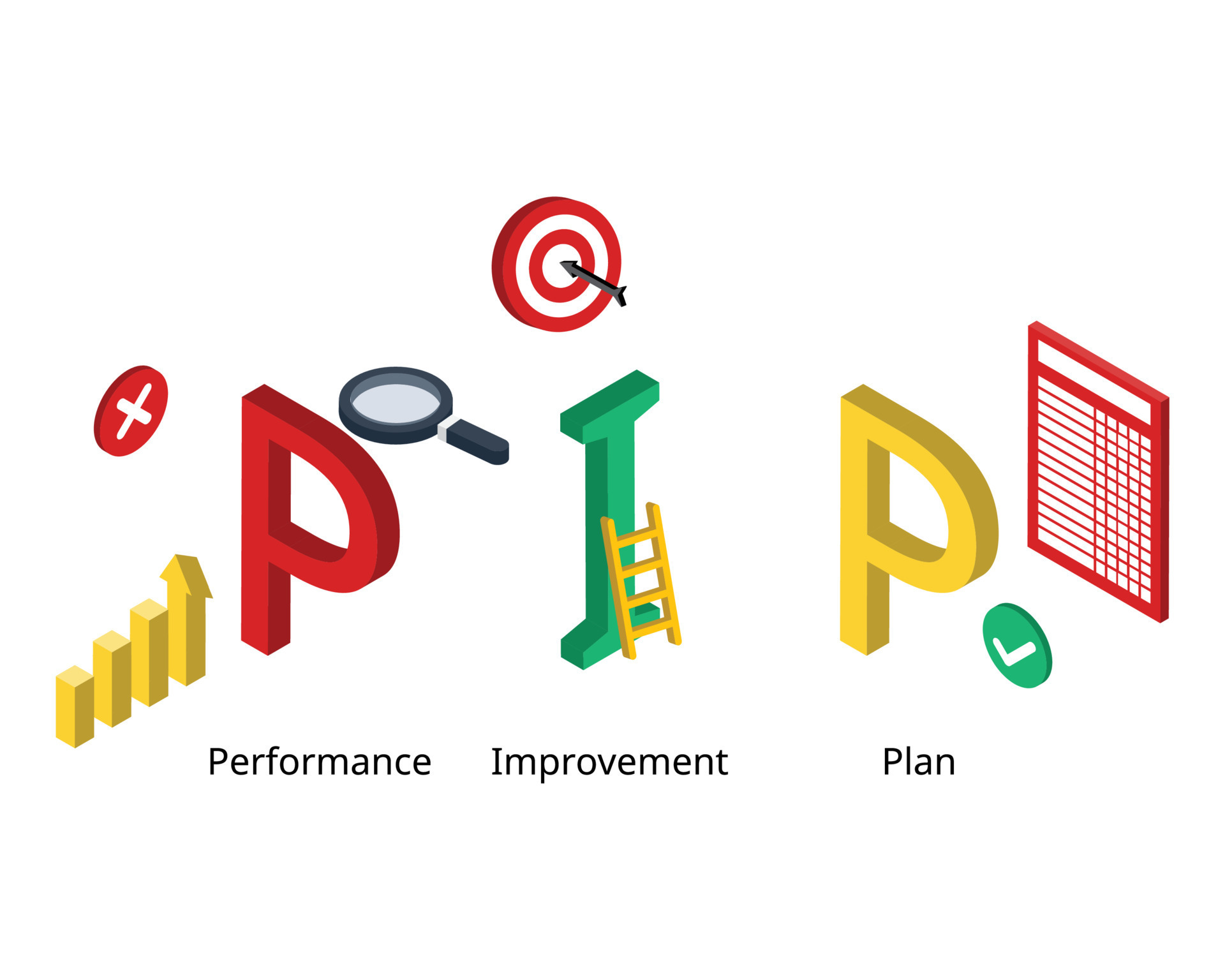
For any employee, a performance improvement plan (PIP) is associated with the possibility of losing a well-paid job – and not only an income. Moreover, the fear may be justified since the employer can use a PIP as an excuse to get rid of an «unprofitable» worker.
However, it is essential not to confuse the worst case with the general scenario. In most cases, this tool is designed to develop the staff and clarify the rules of work so that nothing provokes disputes.
This article will tell you how to handle a performance improvement plan professionally and keep your job with minimal losses.
What to Do When You Are Placed on a PIP?
First of all, it is crucial to understand that the essence of a performance improvement plan is to identify shortcomings and give the worker a chance to improve. It is necessary to treat the PIP as a career opportunity, not as a condemnation.
A competent approach to this document excludes the danger of being fired and makes the work plan more transparent.
In addition, in order to successfully implement a PIP and eliminate the shortcomings identified by the boss, it is necessary to follow several simple rules.
Understand the Reasons for Developing the Document
As mentioned above, a performance improvement plan is not a tool for firing but an aid to develop the skills and competencies that the worker lacks.
To do this, the manager needs to identify problem areas and set targets for the employee for a certain period (usually 30-60 days). One of the first steps for the worker will be to get to know these points and prepare the plan for improving their work.
It is important to fully understand the requirements listed in the PIP so that no detail remains unclear. In addition, if the requirements seem too vague, it is necessary to ask for explanations.
Only after analyzing the document in detail can the employee create an effective strategy for changing behavior in accordance with the new requirements.
Consider All the Requirements Carefully
After the PIP has become binding, it becomes necessary to look at all the requirements that must be fulfilled by the deadline.
In doing so, it is critical to compare the goals written in the document with the current skills level and see the necessary step-by-step actions. Subsequently, using the requirements as a guide, the worker can develop their own work plan for the duration of the PIP.
It is a good idea to make the list of requirements for the PIP as detailed as possible and break it down into consecutive steps.
This will significantly simplify the work and allow the employee to monitor the results achieved. It is also useful to keep written records of any meetings on the topic of the PIP: this will help in case of disputes in the future.
Do Not Lose a Chance to Communicate with the Boss?
A competent worker will not refuse to comment on the requirements written in the PIP. Even if some of them seem too strict or even unfair, the employee should discuss this with the manager and explain their position.
Such honesty will not lead to the employee’s dismissal – on the contrary, it will make a good impression and demonstrate the worker’s desire to solve the problem.
Moreover, constant communication with the boss will give a chance to express concerns and ask for advice. To do this, you can plan regular meetings to discuss the current status of work in accordance with the PIP.
This will allow the boss to monitor whether the employee is improving and the employee to find out exactly what the boss expects.
Show Your Initiative
For the employer, the fulfillment of all the requirements listed in the PIP is not enough – they want to see the improvement of the employee throughout the period of improvement.
Therefore, in addition to eliminating the shortcomings mentioned in the document, it is necessary to develop further and show the boss the desire to improve. This means continuing to work on the identified problems, improving skills, and searching for ways to optimize the work plan.
It is also crucial to maintain a high level of initiative. Even if the initial results inspire confidence, this does not mean that everything is perfect – the supervisor expects to see steady motivation and stable work.
Moreover, the more effort the worker shows, the more positive will be his attitude towards him, which will help in future career growth. Therefore, the PIP gives the employee a chance to prove to the boss his professionalism, among other things.
Know Your Employee Rights
Unfortunately, there is always a possibility that the employer will use the PIP to try to get rid of an «unprofitable» employee. In such situations, it is necessary to know one’s rights and be prepared for further actions.
First of all, it is crucial to remember that the PIP is a document that sets requirements for the work of the employee, not a reason for asking for resignation. If the employee is ready to fight and prove that the boss uses the PIP to cover up for his desire to get rid of the worker, then expert help may be needed.
For example, turning to an employment lawyer Toronto professional can be a wise decision in such situations. A competent employment lawyer will be able to advise the worker and provide assistance in challenging the document, considering all the nuances of the law.

Do Not Worry about Your Future
It is vital to stay strong in a situation where the employer has given the worker a performance improvement plan. This will avoid problems associated with a decrease in productivity due to panic and reduce the likelihood of mistakes.
A balanced and measured approach will help in finding the right strategy to deal with the PIP without losing control of the situation.
In addition, it is necessary not to speculate about possible consequences and try to look at the current problems only from the point of view of solutions. It is important to remember that only consistent work can bring positive results, and all the problems will be solved when the time comes.
Conclusion
A performance improvement plan is an obstacle in the career of any worker, but at the same time, it is a chance to show employers loyalty and professionalism.
Handling a PIP properly will allow the employee to keep their job and achieve positive results in their work. Although the document may seem intimidating, competent preparation and careful planning will ease the work and make the employee confident that no unforeseen situations will arise.
