

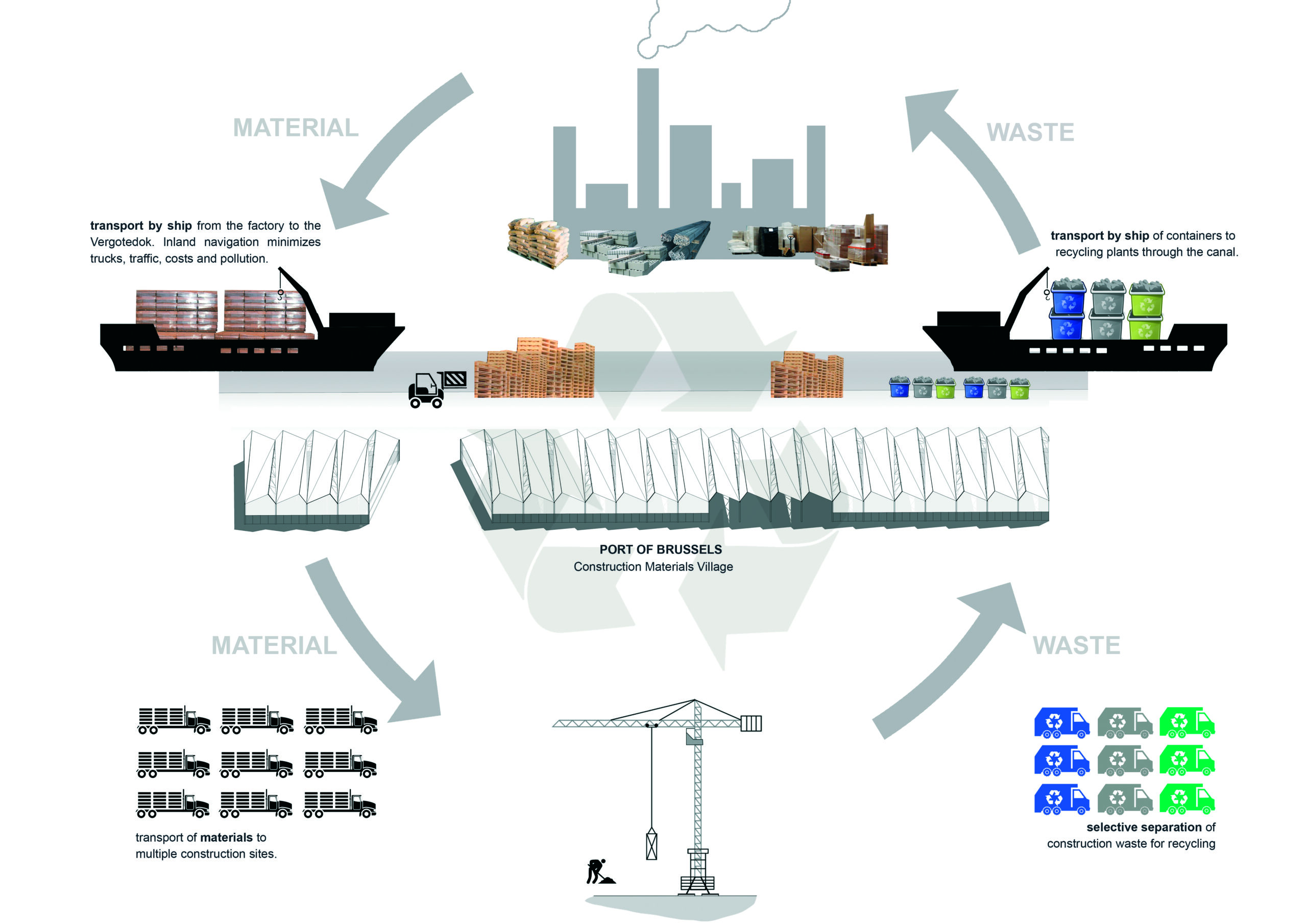
Material flow management cuts costs and improves efficiency by reducing wasted movement, cutting excess inventory, shortening production cycles, and giving teams the data they need to fix bottlenecks before they turn into losses.
When raw materials, components, and finished goods move through a facility with as little friction as possible, businesses spend less on labor, storage, and handling, while shipping products out the door faster.
That’s the whole idea in a nutshell – but there’s a lot more worth unpacking about how it actually works and why so many manufacturers still get it wrong.
Below, we’ll break down what material flow actually means on the shop floor, why so much money quietly leaks out of poorly planned operations, and what a smarter approach to material flow optimization and material flow planning looks like in practice.
What Material Flow Management Actually Means?
At its core, material flow describes the physical path that goods take from the moment they arrive at a facility to the moment they leave as a finished product.
That includes raw materials coming through receiving docks, components moving between workstations, half-built products waiting in queues, and finished goods heading to shipping.
Material flow management is the discipline of overseeing and directing that path on purpose, rather than letting it happen by accident.
It covers layout decisions, transport methods, storage placement, scheduling, and the coordination between departments that touch the same physical items at different points in the process.
Why This Matters More Than It Used To?
Manufacturing margins have gotten tighter, labor costs keep climbing, and customers expect faster turnaround than they did even a few years ago. A business that treats material movement as an afterthought is handing its competitors an advantage for free.
Where The Hidden Costs Actually Come From?
Most facilities don’t lose money in one obvious place. It leaks out in small amounts, spread across dozens of daily decisions about where things sit and how far someone has to carry them.
Facilities that want expert guidance often turn to specialists in material flow management for a fresh, outside perspective on production planning.
Here are three of the most common cost drains tied to poor material flow:
- Excess handling and transport. Every time a part gets picked up, carried, set down, and picked up again, that’s labor time spent on something that adds zero value to the product itself.
- Idle inventory tying up space and cash. Materials sitting in storage for longer than necessary occupy square footage that could hold something else, and they represent money that isn’t doing anything productive.
- Production delays from poor sequencing. When materials arrive at a workstation late, out of order, or in the wrong quantity, the whole line slows down waiting to catch up.
None of these show up as a single line item on a budget. They’re baked into overtime hours, warehouse rent, and missed delivery windows – which is exactly why they’re so easy to ignore until someone finally maps the actual flow of materials and sees where the waste is hiding.
How Material Flow Optimization Reduces Waste And Cost?
Material flow optimization is the practical side of the equation – the actual work of redesigning routes, layouts, and schedules so that materials travel the shortest reasonable distance and spend the least amount of time sitting still.
A well-organized production floor recently studied in a 2025 analysis of a refrigerator manufacturing facility showed how much this matters in practice.
Researchers built an optimization model for inter-unit material movement and product allocation across warehouses and workstations, and found that better zone allocation and routing decisions meaningfully improved the efficiency of internal logistics operations, cutting unnecessary transport steps between functional areas of the plant.
Layout design plays a similarly large role. Research published by intralogistics specialists in 2025 found that effective layout planning can lower material handling costs by as much as 10-30%, while boosting productivity by up to 25% in some operations.
Facilities with flexible, well-planned layouts also reported changeover times that were 20-30% faster than those with rigid, unplanned configurations.
What Optimization Looks Like Day-to-Day?
In practice, material flow optimization usually means shortening travel distances between connected processes, grouping related workstations together, and removing unnecessary storage points that only exist because nobody redesigned the layout after the business grew.
Building A Smarter Material Flow Plan
Optimization fixes what already exists. Material flow planning is what prevents the mess from forming in the first place. It’s the forward-looking side of the discipline – mapping out how materials should move before a facility is built, expanded, or reorganized.
Good material flow planning usually starts with a simple question: what does each product actually need to touch, and in what order? From there, planners can lay out departments, storage zones, and transport paths so that materials naturally move in one direction rather than crisscrossing the facility.
Three things tend to separate strong material flow planning from weak planning:
- Mapping the current state honestly. Before anything gets redesigned, someone needs to trace exactly how materials move today, including the inefficient detours nobody likes to admit exist.
- Designing for the product, not the building. Layouts should follow the logical sequence of production steps, rather than being squeezed into whatever space happens to be available.
- Building in flexibility. Product lines change, and a rigid plan built for today’s product mix often becomes a liability within a couple of years.
Academic work on production hall design and digital factory planning published in 2024 reinforces this point, noting that combining material flow analysis with modern planning software gives manufacturers sharper insight into where handling and storage improvements will pay off, and helps facilities adapt more easily as production needs shift.
Where Technology Fits Into The Plan?
Digital tools have made it far easier to model material flow before committing to a physical layout. Simulation software, digital twins, and flow-mapping platforms let planners test different configurations without shutting down a real production line to experiment.
That kind of testing used to be expensive and slow; now it’s often just a matter of adjusting a model and rerunning the numbers.
Practical Ways To Improve Material Flow Right Now
Not every business is ready for a full facility redesign, and most don’t need one to see real improvement. Smaller, targeted changes often deliver a solid share of the benefit without the disruption of a major overhaul.
A few starting points worth considering:
- Walk the actual production floor and trace one product’s full path from receiving to shipping, noting every stop, delay, and backtrack along the way.
- Identify the storage points that exist purely because of layout gaps, not because they serve an actual production purpose.
- Look at scheduling data to see where materials consistently arrive too early or too late for the next step in the process.
- Talk to the people actually moving materials every day – operators usually know exactly where the friction points are, even if nobody’s asked them directly.
These steps won’t replace a proper material flow optimization project, but they tend to surface the most obvious problems fast, which is often enough to justify a bigger investment later.
Where This Leaves Manufacturers Today?
Material flow management isn’t a trend that’s going to fade out. As production volumes grow and customer expectations for speed keep rising, the businesses that treat material movement as a strategic decision – not background noise – are the ones that keep their costs in check.
Whether that means a full material flow planning overhaul or a smaller round of material flow optimization on an existing layout, the underlying principle stays the same: materials that move with purpose cost less than materials that move by accident.
Frequently Asked Questions
What is material flow and how is it different from supply chain management?
Material flow refers specifically to the physical movement of raw materials, components, and finished goods through a facility or network. Supply chain management is the broader discipline that includes material flow along with sourcing, procurement, finance, and customer delivery. Material flow is one piece of the larger supply chain picture, focused mainly on the physical route goods take from point to point.
Why is managing the flow of materials important for a business?
Poorly managed material flow leads to wasted labor, excess inventory, and production delays, all of which quietly increase operating costs. When materials move efficiently, products reach the right stage of production at the right time, in the right quantity, which keeps operations running smoothly and protects profit margins.
What tools are commonly used to map and visualize material flow?
Value stream maps are one of the most widely used tools for tracing material flow through a facility. Many teams pair this with layout diagrams, Sankey diagrams, or digital simulation software to see exactly where materials travel and where time gets lost along the way.
What are the main objectives of material flow management?
The core objectives usually include reducing unnecessary handling, minimizing storage time, shortening production cycles, and making sure materials are available at the right place and time without excess buildup. Ultimately, the goal is to support production without wasting money or space.
How does poor material flow affect overall productivity in a facility?
When materials sit idle, travel inefficient routes, or arrive at the wrong time, entire production lines slow down waiting to catch up. This creates a ripple effect across departments, since one delayed step often pushes back everything scheduled after it, reducing the total output a facility can achieve in a given period.
