

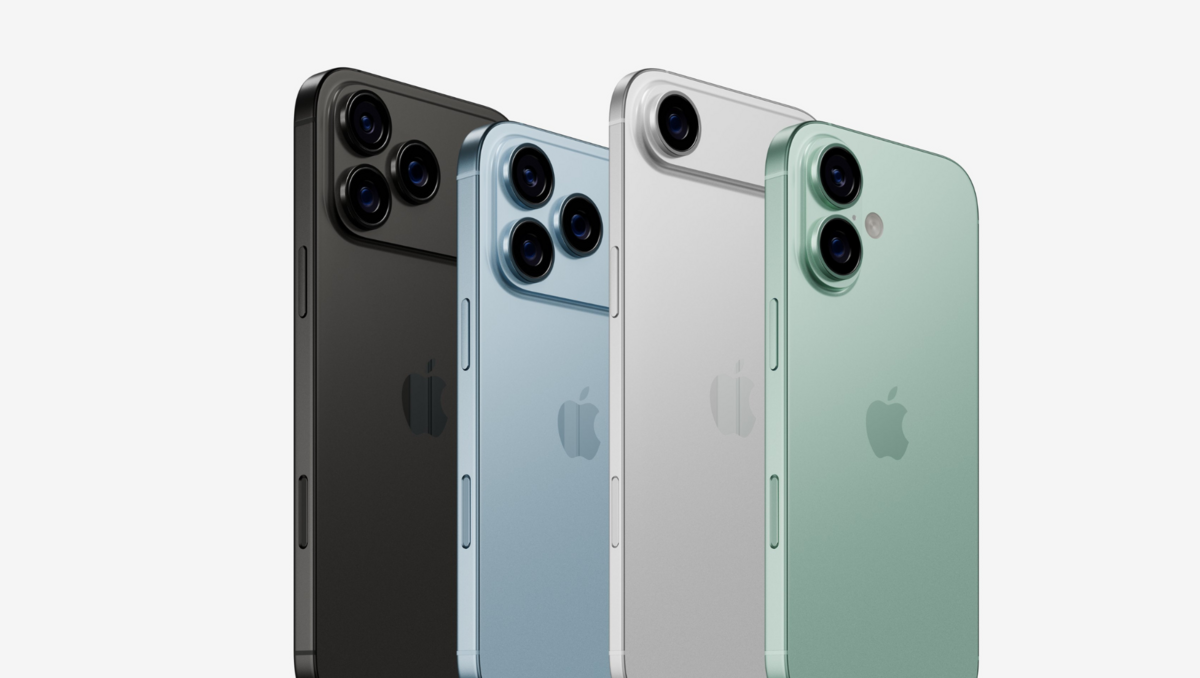
After much speculation about both the new phone and the latest iOS, the first half of September brought both and officially kicked off the era of the new Apple generation. The popular beans officially unveiled the iPhone 17 on September 9, 2026, alongside its siblings, the iPhone 17 Pro, 17 Pro Max, and a new ultra thin iPhone Air model.
Pre orders began shortly afterward, and the devices became widely available starting September 19, 2026. Apple preserved its usual launch cadence, and the lineup represents a more significant refresh than in some recent years.
With four models, there is something for everyone, so let us determine what the models bring and which trim is the right option for your needs.
User Experience and Entertainment
From the vantage of a user interested in entertainment and lifestyle, the new lineup is feature-rich and high in potential. In terms of lifestyle tracking apps, mainly health, fitness, sleep, and activity monitoring, the performance headroom ensures that sensor fusion, background tracking, AI-based predictions, and data visualization remain fluid.
Paired devices like Apple Watch, smart rings, or health sensors benefit from the connectivity suite. The always-on display and dynamic refresh help the phone retain glanceable dashboards without draining the battery excessively.
For gaming, the iPhone 17 is very well equipped. The efficient cooling in Pro models mitigates thermal throttling during long game sessions, while the GPU in the base model is sufficiently capable for many titles. The high refresh display reduces input latency, making fast-paced games more responsive.
Combined with robust connectivity (5G, Wi‑Fi 7), online multiplayer and streaming game modes feel seamless and lag free. This also benefits live sports streaming and any other kind of high-definition video streaming.
Fans of social media, content creation, and consumption benefit from the upgraded camera system with higher resolution, better low-light capture, and HDR video. The front camera’s Center Stage mode ensures optimal framing during live streams or video calls.
The fast processing and network connectivity enable smoother scrolling, faster uploads, and snappier multitasking. Aesthetic improvements in iOS 26 enhance the look and feel of apps, animations, and transitions, giving visually richer and more interactive sessions.
Hobbies and lifestyle are enhanced. For those who enjoy betting on sports as they watch the games, the iPhone 17 provides a smooth, responsive experience with the 120 Hz ProMotion display’s animation and interface transitions.
They feel fluid, while the A19 chip offers strong single-thread and GPU performance for rendering live odds, updating charts, and handling real-time data.
The Always On mode ensures key betting lines or notifications can stay visible without fully waking the screen. Furthermore, security features add confidence for handling financial apps and sensitive authentication flows, be it fiat or cryptocurrencies.
New Specs and Features
Under the hood, the iPhone 17 is powered by Apple’s A19 chipset, built on a 3 nm process node that promises improvements in performance and efficiency over the A18.
The base model includes 8 GB of RAM (LPDDR5X) and storage options of 256 GB and 512 GB, with no external storage expansion. The iPhone 17 also includes Apple’s Memory Integrity Enforcement (MIE) for enhanced memory safety defenses.
The display is a 6.3-inch Super Retina XDR OLED panel with ProMotion 120 Hz adaptive refresh rate, Always On display support, HDR capability, and a reported peak brightness reaching up to 3,000 nits in outdoor conditions. The resolution is approximately 2622×1206 (≈460 ppi).
Durability is enhanced with Ceramic Shield 2 on the front and a color infused glass back. It comes in multiple stylish finishes, including Lavender, Sage, Mist Blue, White, and Black.
In terms of connectivity, the iPhone 17 supports 5G via a Qualcomm X80 modem, Wi‑Fi 7, Bluetooth 6.0, Ultra wideband (UWB), Thread, NFC, and dual SIM options with either eSIM or nano SIM combinations depending on region.
For charging, it supports wired fast charging with a 40W adapter that gives up to 50 % in 20 minutes, MagSafe wireless charging, and Qi 2 wireless charging.
The battery is rated at approximately 3,692 mAh (14.351 Wh). In real world testing, gaming runtime clocks in around 9 hours, browsing up to 17 hours, and video playback about 7.5 hours.
Camera hardware includes a dual 48 MP “Dual Fusion” rear system (wide and ultra wide), with sensor shift OIS and computational enhancements. The front-facing camera is an 18 MP sensor with a Center Stage feature and autofocus.
Video recording supports 4K at 60 fps, HDR, Dolby Vision, and cinematic modes. The phone also offers IP68 dust and water resistance up to 6 meters for 30 minutes.
Software at launch is the brand new iOS 26 that introduces a visual refresh dubbed “Liquid Glass,” new Live Translation, enhanced messaging features, and tighter integration of “Apple Intelligence” across apps.
One of the standout features in the iPhone 17 is the expansion of ProMotion 120 Hz and Always On display to the base model, features previously reserved for “Pro” iPhones.
The enhanced Apple Intelligence layer is woven through the OS to offer smarter suggestions, on-device processing for privacy, and visual reasoning, such as asking questions about images or generating custom replies.
The memory integrity enforcement (MIE) is a security feature aiming to reduce vulnerability to low level exploits. The higher end trims of iPhone 17 Pro and Pro Max variants also incorporate vapor chamber cooling to better dissipate heat under sustained load.
iPhone 17 Models Side-by-Side Comparison
| Specification | iPhone 17 | iPhone 17 Air | iPhone 17 Pro | iPhone 17 Pro Max |
| Starting Price | $799 | $999 | $1,099 | $1,199 |
| Storage Options | 256 GB, 512 GB | 256 GB, 512 GB, 1 TB | 256 GB, 512 GB, 1 TB | 256 GB, 512 GB, 1 TB, 2 TB |
| Chip / Processor | A19 (standard) | A19 Pro | A19 Pro | A19 Pro |
| RAM | 8 GB | 12 GB | 12 GB | 12 GB |
| Battery Capacity | 3,692 mAh | 3,149 mAh | 4,252 mAh | 5,088 mAh |
| Battery Life (Video) | Up to 30 hours | Up to 27 hours | Up to 33 hours | Up to 39 hours |
| Display | 6.3″ OLED, 120 Hz | 6.5″ OLED, 120 Hz | 6.3″ OLED, 120 Hz | 6.9″ OLED, 120 Hz |
| Brightness | Peak ~3,000 nits | Peak ~3,000 nits | Peak ~3,000 nits | Peak ~3,000 nits |
| Rear Camera | Dual 48 MP (Main + UW) | Single 48 MP (Advanced OIS) | Triple 48 MP (Main, UW, Telephoto) | Triple 48 MP (Same as Pro) |
| Front Camera | 18 MP Center Stage | 18 MP Center Stage | 18 MP | 18 MP |
| Design / Materials | Aluminum frame | Titanium, ultra thin (5.64 mm) | Aluminum frame with vapor cooling | Same as Pro |
| Dimensions | 149.6 mm (height) x 71.5 mm (width) x 7.95 mm (depth) | 156.2 mm (height) x 74.7 mm (width) x 5.64 mm (depth) | 150.0 mm (height) x 71.9 mm (width) x 8.75 mm (depth) | 163.4 mm (height) x 78.0 mm (width) x 8.75 mm (depth) |
| Weight | 177 g | 16g g | 206 g | 233 g |
| Charging (Wired) | Up to 40 W (50% in ~20 min) | 20 W (50% in ~30 min) | Up to 40 W | Up to 40 W |
| Charging (Wireless) | MagSafe / Qi2 support | MagSafe / Qi2 support | MagSafe / Qi2 support | MagSafe / Qi2 support |
| Other Features | Dynamic Island, USB C, Always On | Slim profile, Dynamic Island, USB C | ProMotion, Always On, USB C | Best overall package, top battery |
Who are the Different Models For?
iPhone 17: For Everyday Users Who Want Solid Performance
The iPhone 17 is aimed at users who want a reliable, modern iPhone without needing all the high end bells and whistles. It offers excellent performance with the A19 chip, a high quality OLED display with a 120 Hz refresh rate, and improved battery life. All of this at a relatively accessible price of a typical high end phone.
This model is perfect for students, casual users, or anyone upgrading from an older iPhone (like iPhone 12 or 13) who does not need pro level cameras or storage.
It is the “default” iPhone and great for 90% of typical daily use like messaging, photos, social media, streaming, and light gaming. It is the basic model that most people who want the new smartphone from Apple will end up getting.
iPhone 17 Air: For Minimalists and Design Lovers Who Want Power Without Bulk
Moving up, we have the new addition to the typical three phone lineup of previous versions. The iPhone 17 Air is designed for people who value a thin, lightweight design without compromising too much on performance.
It is powered by the same A19 Pro chip as the Pro models but comes in a remarkably slim body, making it ideal for users who prioritize portability, aesthetics, and premium materials like titanium.
It is a great choice for professionals who want a sleek device for work and lifestyle use, or those upgrading from older “mini” or “Plus” models but want something lighter and more refined. It trades a bit of battery life and camera versatility for its unique design. Also, it looks great and is quite fashionable.
iPhone 17 Pro:For Power Users, Content Creators, and Photography Enthusiasts
The iPhone 17 Pro targets users who want top tier performance and pro grade camera systems without going to the larger Pro Max. It is ideal for content creators, mobile photographers, and professionals who use their phone heavily throughout the day, especially for photo and/or video editing, multitasking, or gaming.
The triple lens camera system, high RAM, vapor chamber cooling, and 1 TB storage option make it a compact powerhouse. If you want the best features Apple offers in a more manageable size, the Pro is the sweet spot of power and price.
iPhone 17 Pro Max:For Maximalists, Power Users, and All Day Workflows
Finally, as the true flagship of this new model, there is the Pro Max. This trim is built for users who want everything, as it has the biggest display, the best cameras, the longest battery life, and the highest storage (up to 2 TB).
It is perfect for serious mobile photographers, videographers, business professionals on the go, and Apple ecosystem power users who depend on their phone as their main work and media device.
The larger screen also makes it great for reading, multitasking, watching movies and series, and gaming. If you want zero compromises and do not mind the larger size or higher price, the Pro Max is the ultimate iPhone experience.
iPhone and iOS Frequently Asked Questions (FAQs)
1. Can I update an old iPhone to the latest iOS version?
It depends on the model. Apple supports older iPhones for many years, but eventually stops supporting very old models. For example, as of 2026, the iPhone 8 and iPhone X are no longer supported by iOS 18, while the new iOS 26 will support starting with the iPhone 11.
2. What is Face ID, and how secure is it?
Face ID is Apple’s facial recognition system that uses infrared and depth sensors to map the user’s face. It is highly secure and less likely to be fooled than fingerprint or simple facial recognition systems on many Android phones.
3. How can I improve battery life on my iPhone?
You can extend battery life by doing a few things, mainly reducing screen brightness, enabling Low Power Mode, disabling background app refresh, and turning off location services for non essential apps.
4. What is iCloud, and do I need it?
iCloud is Apple’s cloud storage service. It backs up your photos, contacts, app data, and settings. While not strictly necessary, using iCloud can protect your data and make switching to a new iPhone a much easier transition.
5. How does AirDrop work, and is it secure?
AirDrop uses Bluetooth and Wi-Fi to send files between Apple devices nearby. It is encrypted and secure as long as you set your AirDrop to “Contacts Only” or “Receiving Off” when not in use.
6. What is Screen Time?
Screen Time is a feature that lets you monitor and limit your iPhone usage. It can show daily and weekly activity, set app limits, and enable downtime. Parents can also use it to manage kids’ usage i they want to limit their phone usage.
7. Can an iPhone get viruses or malware?
It is very unlikely. iPhones run on a closed system and have sandboxed apps set by the famously strict App Store rules. Still, phishing attacks or shady configuration profiles can be a risk. Always download apps from the App Store and avoid suspicious links.
8. What is the difference between a physical SIM and an eSIM on iPhones?
A physical SIM is a removable card, while an eSIM is a digital SIM embedded into the phone. Recent iPhones (iPhone 14 and newer in the USA) are eSIM only, letting you activate a carrier plan without a physical card.
