

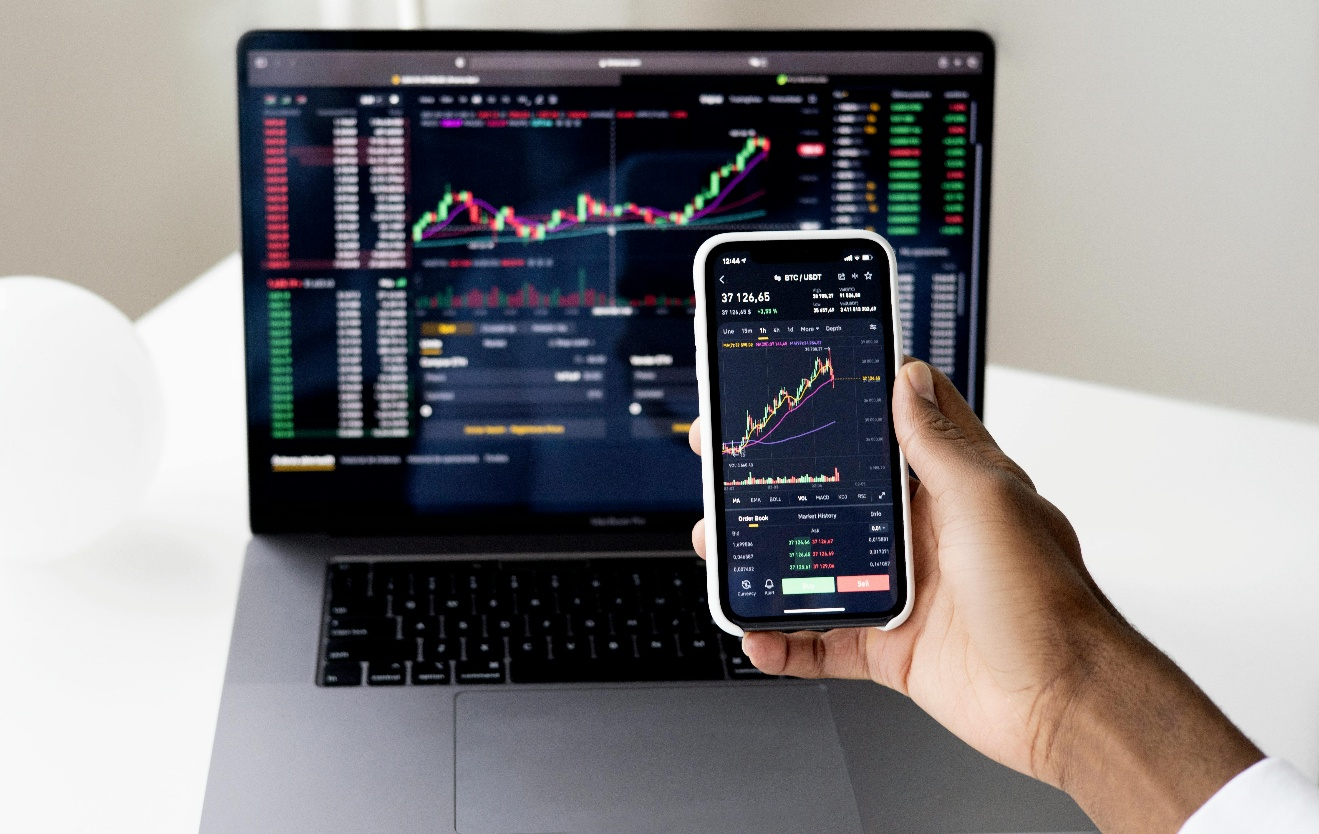
Artificial intelligence is increasingly becoming part of the financial world. This article explores how AI is being used in stock trading, what advantages it offers, and why human insight and reliable market analysis still play an important role.
How AI Is Changing Stock Market Analysis?
Artificial intelligence has already transformed many industries, and financial markets are no exception. In stock trading, AI systems are used to process enormous amounts of market data at speeds that humans cannot match. These systems can analyze historical prices, trading volume, news headlines, and economic indicators in seconds.
For traders, this means faster access to insights. AI models can identify patterns that may suggest potential opportunities or risks in the market.
For example, algorithms can detect correlations between sectors, unusual volatility patterns, or shifts in trading momentum.
Another important advantage is automation. Many traders use AI-driven tools to scan markets continuously and highlight potential setups.
Instead of manually reviewing dozens of charts, traders can focus on evaluating a smaller number of signals identified by AI systems.
However, while AI can process data quickly, it still relies heavily on the quality of the information it receives. Poor data or incomplete market context can lead to inaccurate conclusions, which is why traders often combine AI insights with broader market understanding.
The Importance of Live Updates and Market Analysis
While AI tools are powerful, traders still need reliable sources of real-time information to interpret what is happening in the market. Live updates, economic commentary, and professional analysis help provide the context that automated systems may miss.
This is why many traders combine AI-driven tools with trusted market commentary. For example, DailyForex is a leading market analysis website that provides regular updates on currencies, commodities, indices, and stocks.
These updates help traders understand how economic developments, central bank policies, or geopolitical events might influence market sentiment.
Real-time analysis also helps traders evaluate whether an AI-generated signal makes sense within the broader market environment.
A trading opportunity that looks attractive on a chart might carry additional risk if important economic data is about to be released.
In practice, successful traders often rely on both technologies and human insight. AI can quickly identify potential opportunities, while professional analysis helps traders interpret the significance of those signals.
Risk Management and AI Tools
Another area where AI can assist traders is risk management. Successful trading is not only about finding opportunities but also about controlling potential losses.
AI-powered tools can monitor portfolio exposure across different assets and sectors. If a trader becomes overly concentrated in a single market or industry, the system can highlight the risk and suggest adjustments.
Some AI systems also calculate probability-based risk metrics. These models analyze historical volatility and market conditions to estimate the likelihood of certain price movements. Traders can use this information to set stop-loss levels, adjust position sizes, or diversify their strategies.
Additionally, AI can help detect unusual market behavior. Sudden spikes in volatility or abnormal trading patterns may indicate emerging risks. Early detection allows traders to react quickly before conditions worsen.
Still, risk management decisions ultimately depend on human judgment. AI can provide data-driven insights, but traders must decide how to apply those insights within their broader strategy.
Limitations of AI in Trading
Despite its growing role in financial markets, AI is not a guaranteed path to trading success. Markets are influenced by complex factors such as investor psychology, political developments, and unexpected global events.
AI models are typically trained on historical data. When market conditions change dramatically, these models may struggle to adapt quickly. For example, sudden financial crises or policy changes can produce market behavior that has little resemblance to past data.
There is also the risk of overreliance on automated systems. Traders who depend entirely on algorithms may overlook important macroeconomic signals or market sentiment shifts that are not fully captured by data models.
For this reason, many experienced investors treat AI as a support tool rather than a replacement for human decision making.
Trading Signals and the Role of Written Analysis
One of the most practical ways AI is used in trading is through signal generation. AI systems scan large numbers of assets and identify potential trade setups based on technical indicators, price momentum, or statistical patterns.
These signals can help traders save time by narrowing their focus to the most relevant opportunities. However, signals alone are rarely enough to make confident trading decisions.
This is why many traders prefer trading signals with written analysis, which combine automated alerts with expert commentary explaining the reasoning behind each trade idea. Written explanations help traders understand the broader market context, potential risks, and key price levels.
When signals are supported by analysis, traders gain more than just an entry point. They gain insight into the logic behind the trade, which can improve decision making and build long-term trading skills.
The Future of AI in Stock Trading
Artificial intelligence will likely continue shaping the future of stock trading. As computing power increases and financial datasets grow, AI systems will become even more sophisticated in identifying patterns and managing portfolios.
At the same time, the most effective approach will probably remain a hybrid model. AI can provide speed, automation, and data analysis, while human traders contribute judgment, experience, and market intuition.
Together, these elements create a more balanced trading process. Rather than replacing traders, AI is becoming a powerful tool that helps them navigate increasingly complex financial markets.
