

There is a familiar pattern emerging across EdTech right now. Every product pitch, roadmap, and funding announcement seems to orbit the same idea: more intelligence, more automation, more AI.
The promise is compelling. AI will personalize learning, reduce teacher workload, and optimize classroom engagement at scale. In theory, it sounds like the long-overdue evolution of education technology.
But in practice, something different is happening inside real classrooms.
The tools that actually stick are not the most advanced. They are not the most “intelligent.” They are not the most feature-rich.
They are the simplest.
And that tension between what EdTech is building and what teachers actually use is becoming one of the most important blind spots in the industry.
Much like the cautious optimism explored in discussions around real-world AI value, such as in , the real question is not whether AI can transform classrooms, but whether it consistently survives contact with them.
Classrooms Do Not Behave Like Controlled Environments
One of the most persistent misunderstandings in EdTech is assuming that classrooms behave like controlled environments. They do not.
A classroom is fast-moving, unpredictable, and often chaotic in very human ways:
- A lesson changes mid-flow based on student understanding
- Attention spans fluctuate minute by minute
- Teachers are managing behaviour, content delivery, and emotional dynamics simultaneously
- Technology must be used under time pressure, often without setup time
In this environment, complexity is not a feature. It is friction.
AI-powered systems often introduce layers of decision-making, configuration, or interpretation that simply do not fit the rhythm of teaching. Even when they “work”, they frequently slow things down at the exact moment speed matters most.
This is where the gap begins to show. What looks innovative in a product demo often becomes impractical in a real classroom.
Why AI Tools Struggle in Real Teaching Environments
AI tools in education typically fail not because they are technically weak, but because they are operationally misaligned.
There are a few recurring patterns:
1. Cognitive overload for teachers
Teachers do not want another system that requires interpretation. If a tool outputs suggestions, predictions, or adaptive pathways, it adds mental load rather than removing it.
2. Unclear value in real time
If a teacher cannot immediately see how a tool improves the current lesson, it becomes background noise.
3. Integration friction
Many AI tools assume time for setup, training, or calibration. Real classrooms rarely offer that luxury.
4. Lack of transparency in decisions
If a system “decides” something such as grouping students or recommending interventions, teachers often want to understand why. Many tools do not make that transparent.
The result is a quiet but consistent pattern: adoption drops after initial curiosity.
This is not resistance to innovation. It is resistance to disruption that does not fit the job.
The Hidden Trade-Off Behind Complex EdTech
The EdTech industry often equates sophistication with value. More features, more intelligence layers, more automation logic.
But every added layer introduces a hidden cost:
- More onboarding time
- More points of failure
- More user confusion
- More abandonment risk
In many classrooms, the most successful tools are not the ones with the highest capability ceiling, but the lowest activation threshold.
A teacher does not evaluate software like a procurement team. They evaluate it like a moment-to-moment utility.
If it takes longer to set up than to just ask a student a question, it loses.
This is where simplicity begins to outperform intelligence.
Why Simple Classroom Tools Win Daily Usage?
Across real-world usage patterns, a clear behaviour emerges: teachers gravitate toward tools that behave like classroom “micro-infrastructure.”
These include:
- Random name pickers
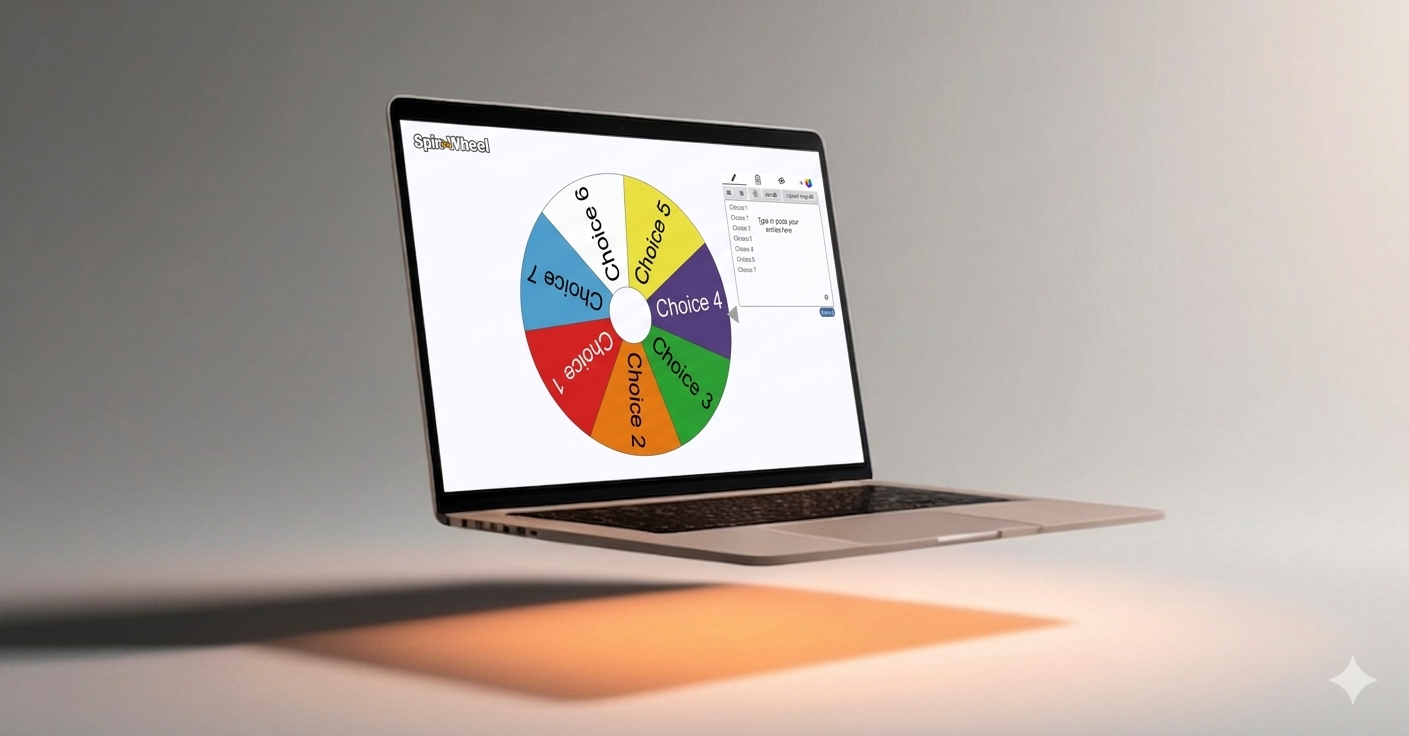
- Spin-the-wheel selectors
- Quick polls
- Instant timers
- Basic quiz generators
None of these tools are technologically impressive. None of them require AI. None of them claim to “transform education.”
But they are used daily.
Why?
Because they solve immediate classroom problems with zero cognitive overhead.
A random picker removes bias in participation. A timer resets focus. A spin wheel turns repetition into engagement. These are not advanced features. They are behavioural shortcuts.
And critically, they work instantly, without explanation.
Micro-Tools Are Outperforming All-in-One Platforms
There is an emerging pattern in classroom engagement that EdTech companies often overlook: micro-tools outperform platforms.
Large, feature-rich systems often aim to centralize everything, including assessment, planning, feedback, analytics, and personalization.
But teachers rarely need everything at once.
They need:
- A quick way to choose a student
- A fast method to re-engage attention
- A lightweight mechanism to inject randomness or fairness
This is why simple tools persist even in schools that already have enterprise-grade systems.
The paradox is clear: the more “complete” a platform becomes, the less frequently it is used in spontaneous teaching moments.
The Mismatch Between Product Design and Classroom Reality
There is a growing disconnect between product ambition and classroom reality.
On one side, EdTech companies are building systems designed around:
- AI-driven personalization
- Predictive analytics
- Automated differentiation
- Integrated learning ecosystems
On the other side, teachers are selecting tools based on:
- Speed
- Clarity
- Reliability
- Immediate usability
This mismatch is not just a design issue. It is a philosophical one.
Many products are optimized for what education could look like in theory, rather than what it actually looks like in practice.
And in that gap, simplicity wins by default.
Simplicity as the Real Innovation Layer
There is a subtle shift happening in how innovation is being redefined in education technology.
Increasingly, innovation is not about adding intelligence. It is about removing friction.
This perspective aligns closely with broader conversations in productivity software as well, including discussions like, where the most effective tools are often those that quietly reduce effort rather than demand attention.
In classrooms, this principle becomes even more important.
A truly innovative tool is not the one that thinks the most.
It is the one that gets out of the way the fastest.
Rethinking How EdTech Success Should Be Measured
If we reframe how we evaluate classroom technology, a different set of questions emerges:
- Can a teacher use this in under 10 seconds?
- Does it work without explanation?
- Does it reduce or increase decision fatigue?
- Does it survive a noisy, time-pressured classroom environment?
Under these criteria, many advanced AI systems struggle, not because they lack capability, but because they assume conditions that rarely exist in practice.
Meanwhile, simple tools excel.
The Direction Classroom Technology Is Actually Heading
This is not an argument against AI in education. AI absolutely has a role to play, particularly in behind-the-scenes workflows such as content generation, grading assistance, and administrative automation.
But when it comes to real-time classroom engagement, the trajectory may be misunderstood.
The winning tools are unlikely to be the most intelligent.
They will be the least demanding.
They will not require teachers to adapt their workflow around the system. Instead, they will adapt to the rhythm of teaching itself.
And increasingly, that looks less like a sophisticated AI dashboard and more like a button that just works.
