

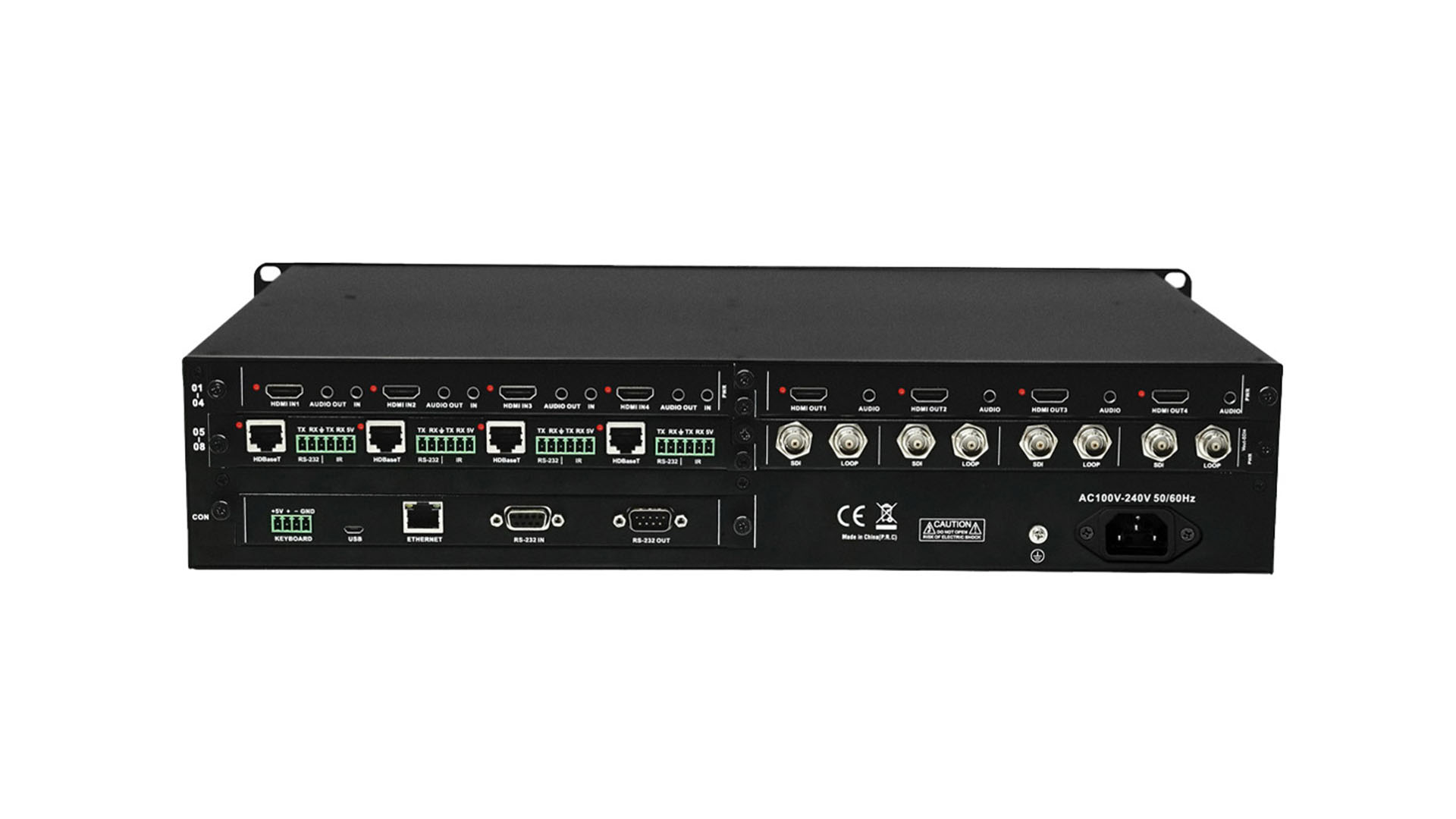
Large-format AV installations demand more than bright screens and high-resolution panels. To deliver a seamless visual experience across multiple displays, integrators and buyers need a reliable video wall processor that can manage content accurately and efficiently.
This technology is essential for building synchronized, flexible video walls in professional environments where image quality and control matter most.
What a Video Wall Processor Does?
A video wall processor is a hardware-based solution designed to distribute and manage multiple video sources across several screens. Its main role is to take incoming content, process it, and display it as one unified image or as several separate windows arranged across a video wall.
In modern AV systems, this device helps with:
- scaling content to fit different screen sizes and resolutions;
- splitting one image across multiple displays;
- showing several sources at the same time;
- adjusting layouts for custom viewing needs;
- keeping playback synchronized across the entire wall.
This makes it a core component in installations where stable performance and precise image control are required.
Where Video Wall Processors Are Most Effective?
Video wall processors are widely used in environments that depend on constant visibility and organized content management. They are especially effective in spaces where several information feeds must be displayed clearly and simultaneously.
Common applications include:
- control rooms and monitoring centers;
- corporate lobbies and conference spaces;
- retail and public digital signage;
- broadcast studios;
- trade shows and large-scale live events.
In these settings, a processor improves presentation quality while simplifying how operators switch, arrange, and control sources.
Key Features to Consider Before Buying
Choosing the right processor depends on the technical demands of the project. A small meeting room display wall will need a different solution than a large command center or event stage.
Before making a decision, consider the following factors:
- the number of inputs and outputs required;
- supported resolutions, including Full HD or 4K;
- image scaling and layout flexibility;
- real-time processing performance;
- future expansion and system scalability;
- ease of control and integration with other AV equipment.
A good buyer should also evaluate whether the processor supports multiple content formats and whether it can adapt to changing installation needs over time.
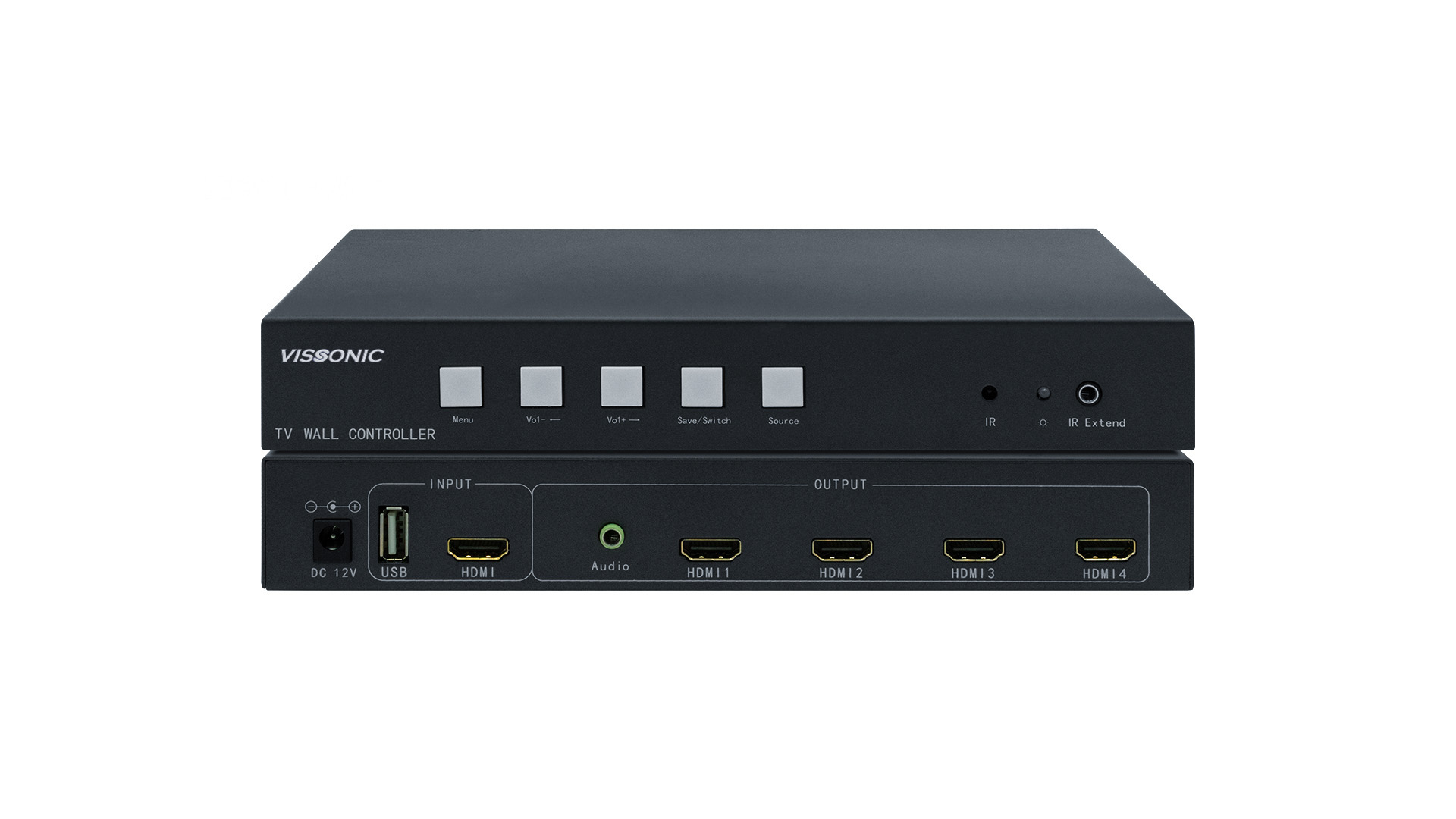
Why the Right Solution Improves AV Efficiency?
A properly selected video wall processor does more than power displays. It improves visual consistency, reduces setup complexity, and helps operators manage content more effectively.
Instead of relying on several disconnected devices, teams can use one centralized system to control source routing, screen layouts, and display behavior.
For businesses and organizations investing in large-scale displays, this means better performance, easier maintenance, and a more professional result. When chosen carefully, the right processor becomes the foundation of an AV system that is scalable, responsive, and ready for demanding visual applications.
