
Lothar Matthäus is a name closely associated with one of the most successful eras in German football. He stood out for his exceptional physical strength, ability to cover the midfield, and all-around tactical intelligence. Explore the journey and accomplishments that established Matthäus as one of football’s most iconic figures with socolive.
The Early Years Of Lothar Matthäus’s Career
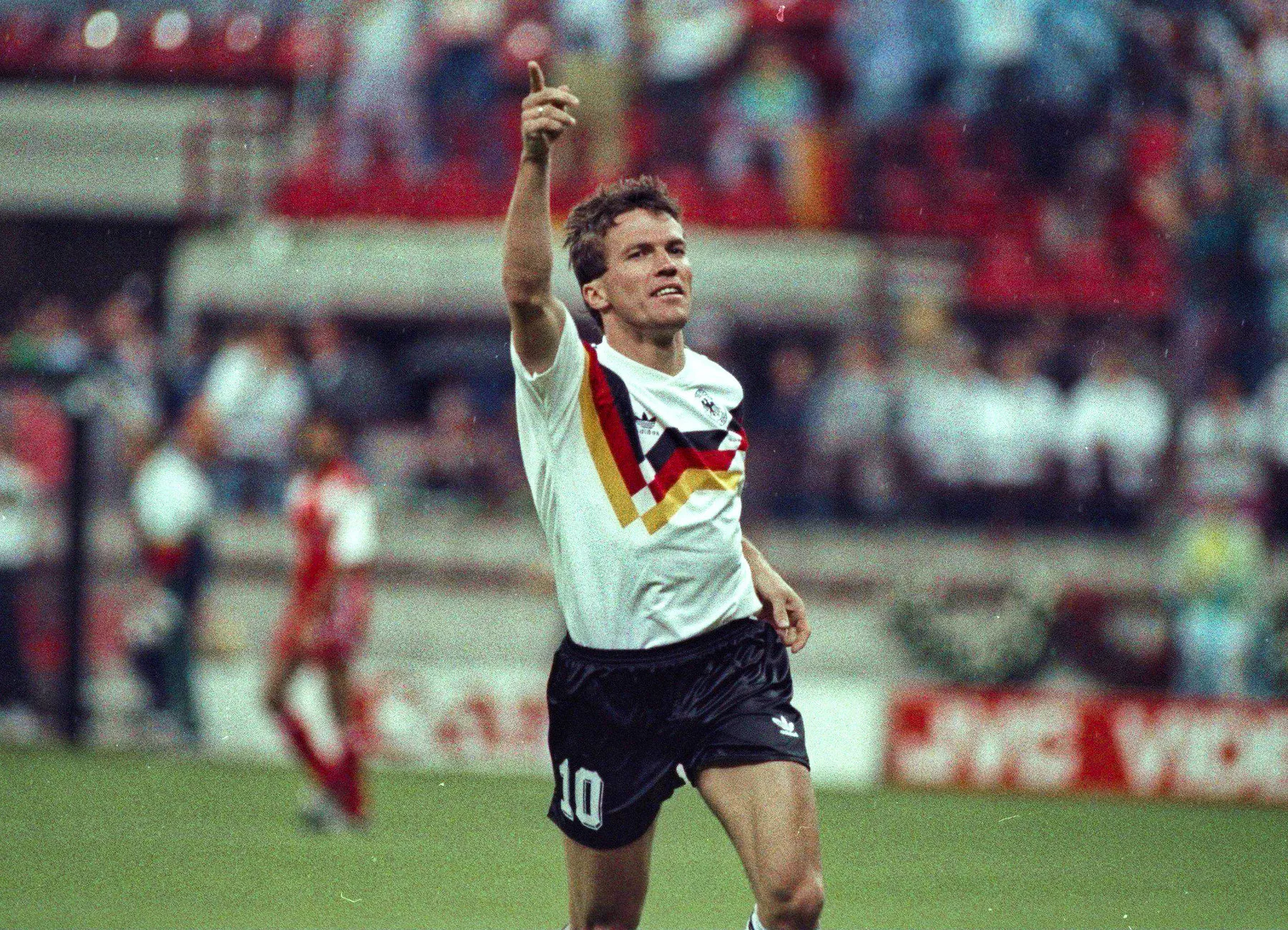
Lothar Matthäus was born on March 21, 1961, in Erlangen, Germany. He first attracted attention while playing for Borussia Mönchengladbach, where he quickly demonstrated the qualities of an energetic and talented midfielder. His strength in challenges, wide movement, and ability to score from distance made Matthäus one of the most promising young players in West German football during the late 1970s and early 1980s.
In 1984, Matthäus moved to Bayern Munich, beginning an important chapter in his career. At Bayern, he continued to develop his midfield abilities while gaining valuable experience in major matches. After four seasons in Munich, Matthäus moved to Inter Milan in 1988 in search of a new challenge in Serie A.
His time at Inter helped Matthäus develop significantly in terms of tactical awareness and leadership. He quickly became an important part of manager Giovanni Trapattoni’s squad. In his first season in Italy, Inter won the Scudetto, with Matthäus playing a major role in the team’s midfield.
Matthäus And His Greatest Achievements With Germany
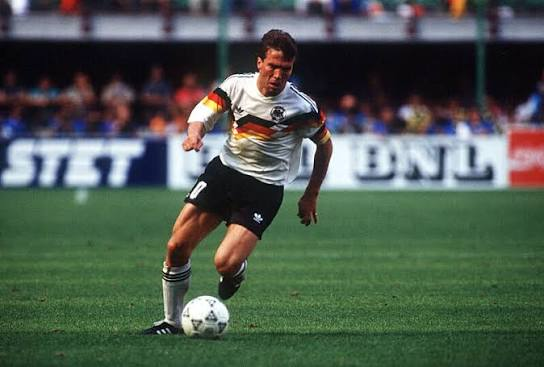
The greatest achievement of Lothar Matthäus’s career was undoubtedly the 1990 World Cup in Italy. He was the captain of West Germany and served as the central figure in the team’s midfield. In the opening match against Yugoslavia, Matthäus scored twice in a 4–1 victory, including a powerful long-range effort that showcased his shooting ability.
West Germany advanced to the final against Argentina, the same opponent that had defeated them in the 1986 World Cup final. The match in Rome was tense and closely contested before being decided in the 85th minute when Andreas Brehme converted a penalty. Matthäus lifted the World Cup trophy as captain after the final, completing one of the most memorable tournaments of his career.
Matthäus’s international achievements extended beyond the 1990 World Cup. He appeared at five World Cups in 1982, 1986, 1990, 1994, and 1998, playing 25 matches in the competition. His longevity at the tournament level remains one of the most remarkable aspects of his international career.
At international level, Matthäus also participated in four European Championships. He won the 1990 World Cup with West Germany and had previously finished runner-up at the 1982 and 1986 World Cups. Overall, Matthäus made 150 appearances for Germany between 1980 and 2000.
His Legacy At Bayern Munich And Inter Milan
Matthäus had two memorable spells with Bayern Munich. After his first period from 1984 to 1988, he returned to the Bavarian club in 1992 and continued to play an important role for several more seasons. His success with Bayern included multiple Bundesliga titles, making him one of the club’s most decorated players of his generation.
One of the most remarkable aspects of Matthäus’s career was his ability to adapt as he grew older. During his younger years, he played as an energetic central midfielder who could make powerful runs, contribute offensively, and strike from distance. After suffering a serious knee injury and losing some of his former pace, he gradually moved into a libero role, relying more on his reading of the game, passing ability, positioning, and leadership.
At Inter Milan, Matthäus won the Scudetto during his first season with the club. He later helped Inter win the UEFA Cup in 1991, adding another major European trophy to his collection. His performances in Italy established him as one of the most influential German players of his generation to compete in Serie A.
In 1991, Matthäus was named FIFA World Player of the Year. The award reflected his outstanding performances around the 1990 World Cup and his status as one of the leading players in world football at the time.
Life Off The Pitch
After ending his playing career, Matthäus moved into coaching and managed several clubs and national teams in different countries. He also remained closely connected to football through his work as an analyst and commentator, regularly appearing in football-related media and television programs.
His playing career helped Matthäus establish a reputation as a highly competitive footballer and an influential dressing-room leader. He has spoken about how he developed his passion for football from an early age, spending a great deal of time practicing and playing with his brother and other people around him. His dedication to training became an important part of his development as a professional player.
Although he has been away from professional football for many years, Matthäus continues to maintain a strong presence in the sport. His opinions on major tournaments, the German national team, and leading players often attract attention from football fans. His name therefore remains prominent whenever discussions turn to the greatest midfielders of previous generations.
See also: bảng xếp hạng socolive
Conclusion
Lothar Matthäus built an extraordinary career filled with major achievements in Germany, Italy, and international football. From an energetic central midfielder, he developed into a leader and captain before successfully adapting to the libero position during the later stages of his career. The 1990 World Cup, multiple Bundesliga titles, the Scudetto with Inter Milan, and the FIFA World Player of the Year award are among the achievements that define the remarkable legacy of Lothar Matthäus.
