

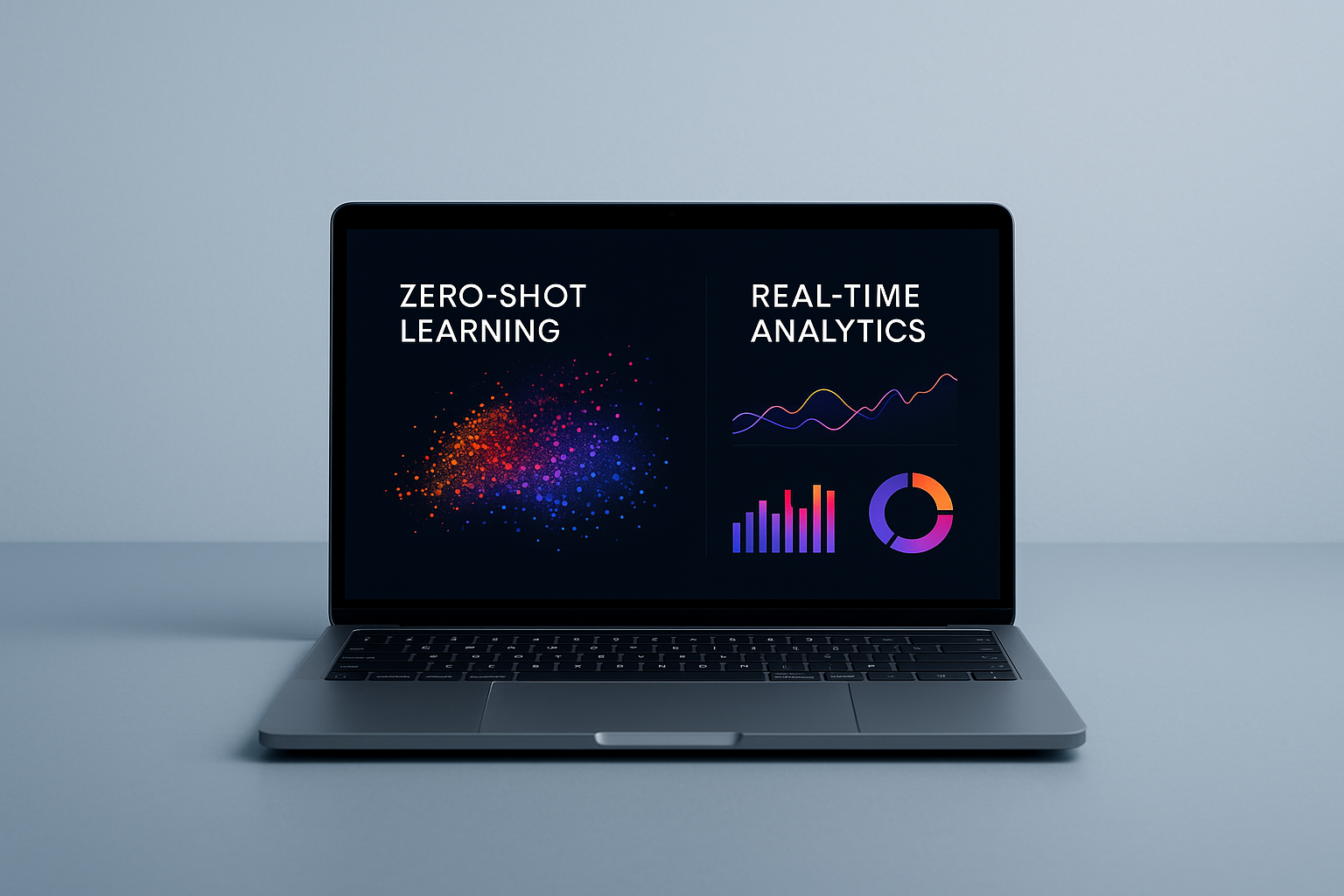
As businesses strive to stay ahead in a rapidly evolving market, moving beyond traditional AI to embrace advanced models is crucial. These next-generation technologies are transforming enterprise decision-making by enabling real-time analytics, offering a competitive edge and optimizing operations effectively.
These technologies revolutionize how companies process information and derive insights. By using AI-driven solutions, businesses can analyze vast amounts of data quickly, enabling swift decision-making processes. This enhances operational efficiency and allows for more accurate forecasting and strategic planning.
Embracing Real-time Analytics for Strategic Advantage
Incorporating real-time analytics into business strategy can dramatically transform decision-making processes. Accessing and interpreting data in real time allows businesses to respond to market changes more effectively. This immediacy in decision-making is crucial for staying competitive in any industry.
Real-time analytics provides actionable insights that inform everything from supply chain management to customer engagement strategies.
When leveraging real-time analytics, businesses unlock a new level of agility. It enables predicting trends and identifying potential issues before they escalate, allowing for preemptive action rather than reactive measures.
The integration of such analytics into business operations can lead to substantial improvements in efficiency, cost reduction and customer satisfaction.
The continuous flow of data requires robust systems capable of handling high volumes without compromising speed or accuracy. Implementing these systems ensures that teams can focus on strategic initiatives rather than data processing delays. Real-time analytics thus plays a pivotal role in fostering a proactive business environment.
Leveraging Advanced Decision Tools
Enhancing business outcomes requires leveraging advanced decision tools powered by next-generation AI technologies. These tools provide deeper insights into business operations and market conditions, allowing for more informed strategic decisions.
By utilizing sophisticated algorithms and machine learning models, businesses can uncover hidden patterns and correlations within their data sets.
The use of such tools facilitates better resource allocation and optimization strategies, resulting in increased productivity and profitability.
Additionally, AI-powered decision tools can help streamline processes by automating routine tasks and providing predictive analyses that guide strategic initiatives. This level of automation reduces operational costs and frees up human resources for more critical tasks.
Investing in advanced decision tools is an investment in a company’s future competitiveness. These technologies are integral to building a responsive and adaptive organizational culture that thrives on innovation and efficiency. As the business landscape continues to evolve, staying ahead requires embracing these innovative solutions.
Exploring the Potential of Zero-shot Learning
Real-world applications of zero-shot learning demonstrate its powerful impact on enterprise operations. This advanced AI model enables machines to recognize and categorize data even when specific examples are not available during training.
For instance, retail companies utilize zero-shot learning to improve inventory management by predicting stock needs based on consumer behavior patterns.
In the healthcare sector, zero-shot learning assists in diagnosing rare diseases by analyzing patient symptoms against a broad database without needing explicit prior examples.
This speeds up diagnosis and enhances accuracy, significantly improving patient care outcomes. Such applications illustrate how this technology drives innovation across various sectors.
By integrating zero-shot learning into processes, businesses gain invaluable insights previously unattainable through traditional methods. Its ability to generalize from existing knowledge makes it an indispensable tool for maintaining a competitive edge while navigating complex data landscapes.
Adopting Next-generation AI Technologies
Adopting next-generation AI technologies for real-time insights begins with evaluating the current infrastructure’s capability to support these systems. Ensuring robust data collection methods provides high-quality inputs necessary for effective analysis.
Establishing a clear understanding of objectives will guide the selection of appropriate technologies tailored to meet specific needs.
Fostering a culture that embraces innovation and continuous improvement is crucial. Educating teams on the benefits of these technologies and how they can enhance everyday operations is essential. Investing in training programs ensures that the workforce is equipped with the necessary skills to leverage AI tools effectively.
A collaborative approach between IT departments and business units is essential for successful implementation. Aligning technical capabilities with strategic goals ensures seamless integration across different functions within the organization.
By doing so, companies can maximize the value derived from advanced AI models, positioning themselves as leaders in utilizing technology for strategic advantage.
