
Being able to understand liquidity management is not just something for mid-sized businesses, but a necessity for all. Any business should be setting plans for growth and process improvement.
But, without liquidity management, if something dramatic happens, such as a drop in customer demand or a supply chain disruption, a liquidity risk can occur. What this means is that there is a lack of cash to finance any liabilities of the company.
This necessitates immediate access to cash in order to remain solvent and not go under. Liquidity management helps to combat this, and while not easy, well-managed companies should always be prepared through the use of top-notch liquidity management software.

What should businesses know?
When it comes to liquidity management, there are some key questions businesses should always be able to answer. These include:
- What is the current cash position?
- Is the company able to meet short-term liabilities?
- What are the sources of cash and its uses?
- How much capital is needed to remain operational?
- What is the cash conversion cycle of the company?
- How can excess cash be effectively used?
These should all be answerable and will help businesses strategize more effectively when it comes to their operations.
Key Ways to Use Liquidity Management Software
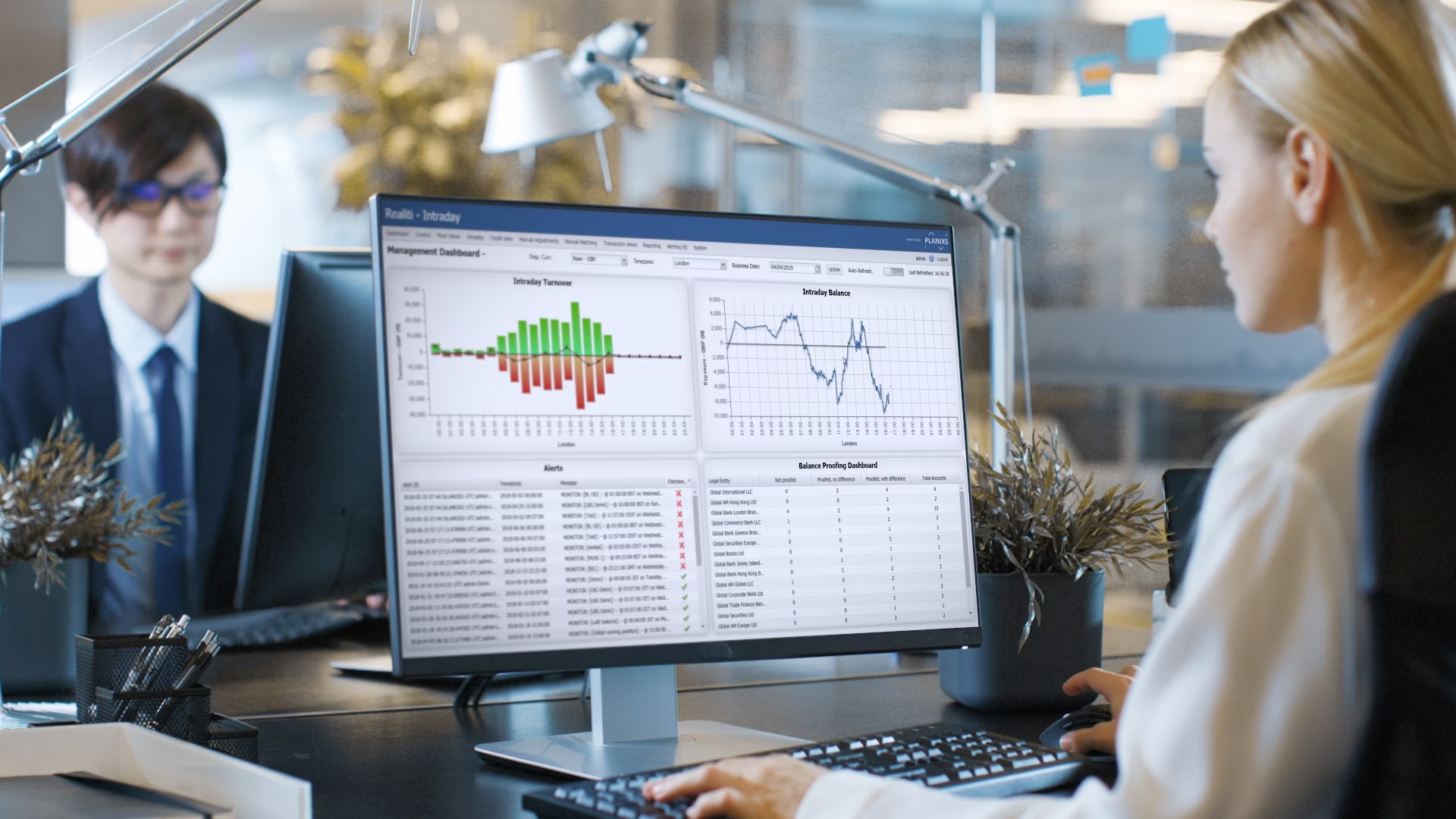
Successfully using the liquidity management process will help mid-sized businesses be more functional in their operations. For example, it can help companies get real-time cash flow visibility. This is because the software shows current cash positions across all accounts.
This helps businesses to monitor their liquidity more effectively, giving them a good base to respond quickly to any potential changes.
This software can also analyze historical and current data, which improves cash flow forecasting. It can help to predict future cash flows with more accurac,y which is an essential step for planning and avoiding both excess and shortfalls when it comes to managing stock and products.
Consequently, this software also helps to optimize the working capital of the business. Receivables and payables can all be analyzed to make sure the working capital is being used effectively. This helps to improve the overall operational efficiency and means that external financing is not required.
Dashboards with liquidity management platforms also offer automated reporting processes, which save time. Additionally, they ensure financial records are accurate and always updated, which frees other resources for strategic planning within the company’s operations.
This is especially useful when it comes to conducting scenario analysis. Businesses can use this type of software to model different scenarios. This can highlight problem areas and show how these scenarios will impact the liquidity of the business.
Furthermore, businesses can then create contingency plans that help them prepare for these types of events. As such, risks can be proactively managed by checking cash flow patterns or potential gaps. This can trigger an alert so that the business can take corrective action before anything untoward occurs.
With all this information, businesses are then in a prime position to then spot and take opportunities. When the business has a clear eye on its cash position, it can then better know where to allocate cash, be it for growth or for further investment.
This is better than holding onto excess cash, which can become idle and would be better used in other areas of the business.
Mid-sized business would do well to invest in this type of liquidity management software due to the wide range of features. Choosing the right software is still key, and businesses need to factor in their size, and what they are looking to get out of it.
