

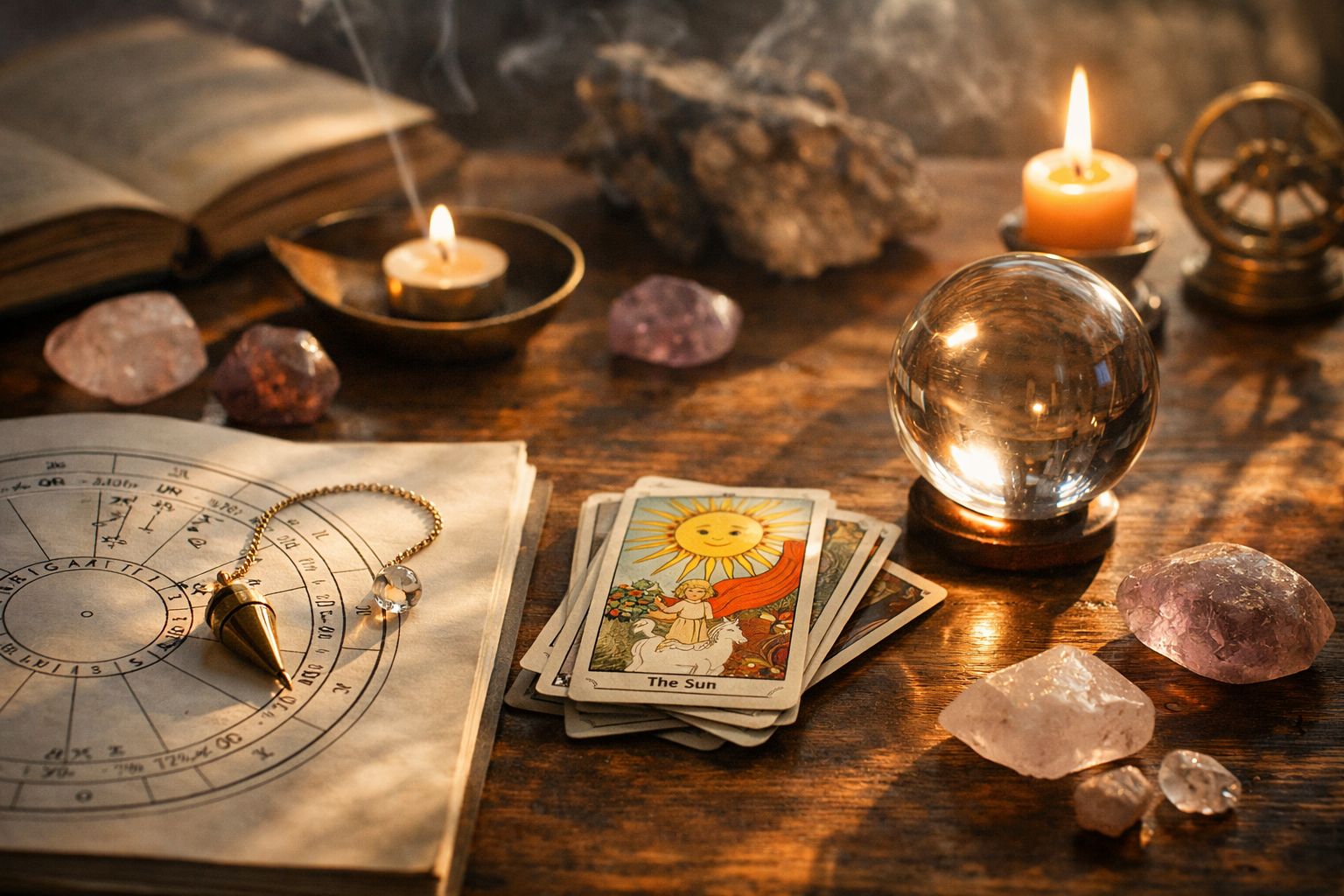
Astrology keeps returning because it offers structure at moments when ordinary life feels loose at the edges. On 3 March 2026, a total lunar eclipse crossed the Pacific, Asia, Australia, and the Americas; 17 days later, the March equinox arrived at 14:46 UTC, giving spring a clean line on the calendar. Belief is like a timetable.
For many readers, horoscopes and moon phases do not replace judgment so much as slow it down long enough for a decision to become visible.
The calendar still runs the room
That is why astrology works best when it starts with dates rather than claims. NASA’s March skywatching guide marked 3 March for the total lunar eclipse, 8 March for a close Venus-Saturn conjunction, and 20 March for the equinox, which gave people three distinct points to hang reflection on during one month instead of one vague feeling that the season was changing.
A person who writes in a notebook after breakfast, checks a moon calendar at lunch, and takes a 20-minute walk after dark is not really chasing magic.
The habit is closer to scorekeeping: mark the day, note the mood, compare the pattern, and wait to see whether the next week confirms it.
Horoscopes work better on paper
Daily guidance is usually useful only when it becomes concrete. Britannica still describes the horoscope as a circle divided into 12 houses, and that image matters because it encourages readers to sort one busy week into named areas of life rather than treat every problem as one large weather system.
Old Farmer’s Almanac currently lists Venus retrograde from 21 April to 4 June 2026 and Mercury retrograde from 29 June to 23 July, and dates like those are most helpful when they are written into a paper planner beside work deadlines, family visits, or a doctor’s appointment on the 12th. The chart does not decide. It gives the day a frame.
Small rituals still hold more than forecasts
The spiritual side of astrology is often less theatrical than outsiders expect. A candle, a pen, a glass of water on the nightstand, or a 78-card tarot deck used for one card in the morning can be enough to slow the pace and make room for thought; Britannica notes that the standard modern tarot deck contains 78 cards, and the object stays relevant because people keep using it to name uncertainty rather than solve it.
One small observation from daily practice explains the appeal: people often write more honestly during eclipse or retrograde weeks, not because the sky changes their character, but because they finally make time to look at the page for 10 minutes without interruption. That is a modest result, but it is still a result.
Uncertainty always finds a ritual
Astrology and gambling meet at the same old human nerve: the wish that a pattern might tell the future a little earlier than experience can.
A horoscope reader already works with incomplete information, whether the tool is 12 signs, a 29.5-day lunar cycle, or one transit moving across the same chart at a different speed, and that is why belief can drift so easily into risk language when outcomes feel unstable.
The same appetite appears when a search for an online casino in ethiopia starts with probability but quickly shifts to timing, streaks, mood, and the hope that one more signal will sharpen the read.
The overlap is not exact, yet the psychology is easy to recognize. People want uncertainty to feel legible, and both astrology and wagering offer temporary systems for doing that.
Season changes still reset the mind
The longer calendar matters too. Timeanddate places the June solstice on 21 June 2026 at 08:24 UTC and the September equinox on 23 September 2026 at 00:05 UTC, while NASA’s eclipse calendar already marks a partial lunar eclipse for the night of 27-28 August 2026 across the Americas, Europe, Africa, and western Asia.
Those are useful checkpoints because personal reflection tends to go stale when it never leaves the same week. A reader who revisits goals on 21 June, checks habits again after the August eclipse, and makes one more adjustment near the September equinox is not performing certainty. He’s checking where he really stands.
The phone became the bedside altar
A lot of this practice now lives on a screen. NASA’s Daily Moon Guide gives the lunar cycle as 29.5 days, and that number now travels through phones as often as it travels through almanacs, which is why the modern routine often begins with a tap on download rather than a trip to a bookshelf.
One app shows the phase, another stores a journal entry, another pushes a horoscope before 7 a.m., and the phone ends up doing the work that used to be split between a wall calendar, a paperback ephemeris, and a folded note in a pocket. That shift has changed the tone of guidance. It is faster, more private, and easier to repeat on ordinary mornings.
Guidance still has to survive the day
The useful test for astrology is not whether every prediction lands. It is whether the practice improves attention on a Tuesday when the inbox is crowded, the sleep was short, and the choice is still yours.
The 2026 sky has already given readers a total lunar eclipse on 3 March, an equinox on 20 March, Venus retrograde beginning on 21 April, and Mercury retrograde beginning on 29 June, which is more than enough material for anyone who wants symbolic structure.
What matters after that is simple: note the pattern, check the feeling, and then act in the real world. Reflection earns its place only when it survives contact with the day.
