

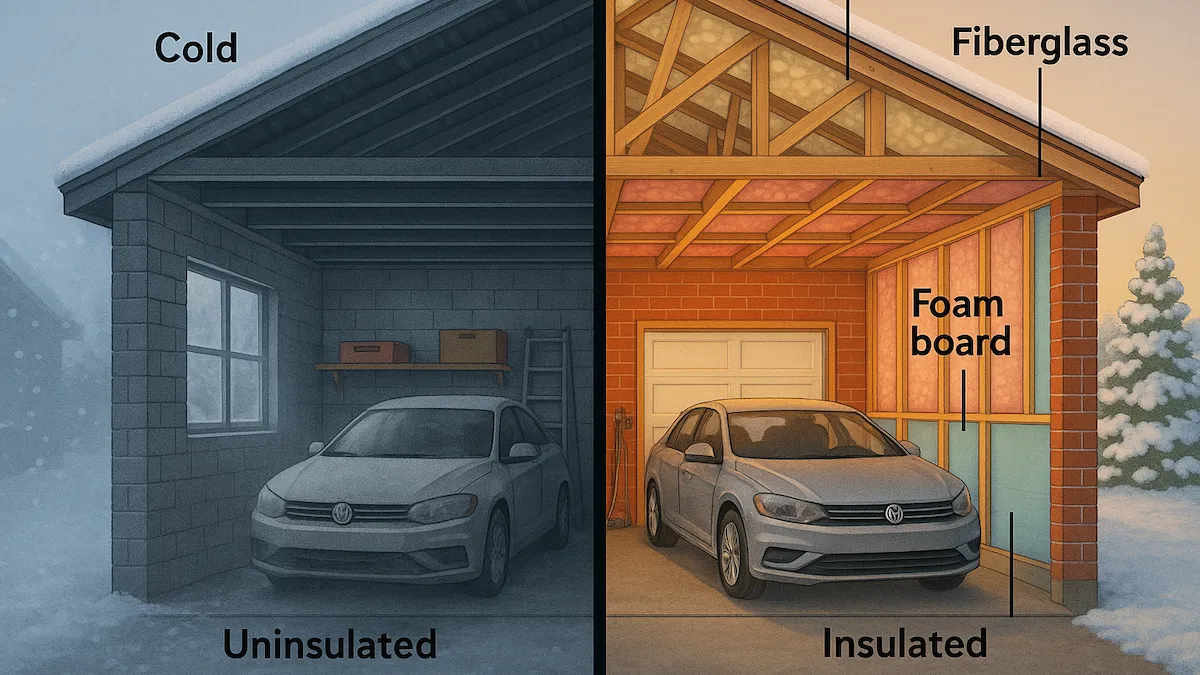
When a garage becomes unbearably hot in summer or cold in winter, adding cooling may seem like the fastest solution. However, installing a mini split for garage use before improving insulation can cause the system to work harder than necessary.
A mini split air conditioner can provide dependable temperature control, but insulation should usually come first because it reduces heat transfer and helps the garage maintain a comfortable temperature.
Why Do Garages Become Uncomfortable in Hot and Cold Weather?

Most garages are built differently from the main living areas of a home. They may have little or no insulation in the walls, ceiling, and garage door. Gaps around doors and windows can also allow outdoor air to enter freely.
During summer, sunlight heats the roof, exterior walls, and garage door. These surfaces transfer heat indoors, where it becomes trapped due to limited ventilation. Vehicles, refrigerators, freezers, and power tools can add even more heat.
In winter, the same lack of insulation allows indoor warmth to escape quickly. Concrete floors, exterior-facing walls, and poorly sealed doors can make the garage feel much colder than the rest of the home. These conditions make it difficult for heating or cooling equipment to maintain a stable temperature.
What Garage Insulation Can—and Cannot—Do
Insulation slows the movement of heat through the garage’s walls, ceiling, and door. During summer, it reduces the amount of outdoor heat entering the space. During winter, it helps retain warmth for longer periods.
The garage door is an important place to start because it is often the largest exterior surface. An insulated garage door or compatible insulation kit can reduce heat transfer, especially when the door receives direct afternoon sunlight. Insulating the ceiling and exterior walls provides further protection.
Air sealing should accompany insulation. Weatherstripping around the garage door and sealant around windows, utility lines, and exterior doors can limit unwanted airflow.
However, insulation does not actively cool or heat the garage. It can slow temperature changes, but the space may still become uncomfortable after several hours of extreme weather. If the garage is regularly used as a workshop, gym, office, or hobby room, insulation alone may not provide adequate comfort.
When Does a Garage Need Air Conditioning?
Air conditioning becomes useful when the garage is occupied frequently or contains items affected by excessive heat and humidity. A home gym may need dependable cooling during workouts, while a workshop may require a more comfortable environment for long projects.
Electronics, tools, wood, paint, and stored belongings may also benefit from better temperature and humidity control.
The appropriate cooling option depends on how often the space is used. Fans can improve air movement but do not reduce the actual temperature. Portable air conditioners can support occasional use, although they require an exhaust route and take up floor space. Window units are another option, but many garages do not have suitable windows.
A ductless mini split is often better suited to regular use. It does not require connection to the home’s central ductwork, and the wall-mounted indoor unit preserves valuable floor space. Many models also provide heating, allowing the garage to remain useful throughout the year.
Why Insulation Should Usually Come Before Air Conditioning
Installing insulation first reduces the amount of heat the cooling system must remove. Without it, cooled air can escape through the walls, ceiling, door, and unsealed gaps. The air conditioner may run for longer periods while still struggling to reach the selected temperature.
Better insulation can also affect equipment sizing. A poorly insulated garage may require more cooling capacity than a similar-sized insulated space. Improving the building envelope before selecting a system produces a more accurate estimate of the required BTUs and may prevent unnecessary oversizing.
Insulation should not be considered a replacement for air conditioning, however. Its role is to create conditions in which the cooling system can operate more effectively.
How to Combine Insulation and Cooling for Year-Round Comfort
Begin by insulating the garage door, ceiling, and exterior walls where practical. Replace damaged weatherstripping and seal visible gaps around windows, doors, and utility openings. Reflective window coverings can further limit summer heat gain.
Once these improvements are complete, select a cooling system based on the garage’s square footage, ceiling height, insulation level, sun exposure, local climate, and heat-producing equipment. Keep doors and windows closed while the system is operating, clean the filters regularly, and avoid setting an unnecessarily low temperature.
For most garages, insulation should come first, followed by properly sized heating and cooling. Together, they provide more consistent comfort and help prevent wasted energy throughout the year.
