

In today’s digital-first world, businesses are drowning in unstructured data and need to process it fast and accurately. Manual data entry and workflows slow down operations and lead to errors, inefficiencies and missed opportunities.
Enter intelligent document processing — a game-changing technology that automates data capture and workflows with the latest tools and platforms. In this guide, we’ll explore how IDP is changing the way businesses handle data and their process automation strategies.
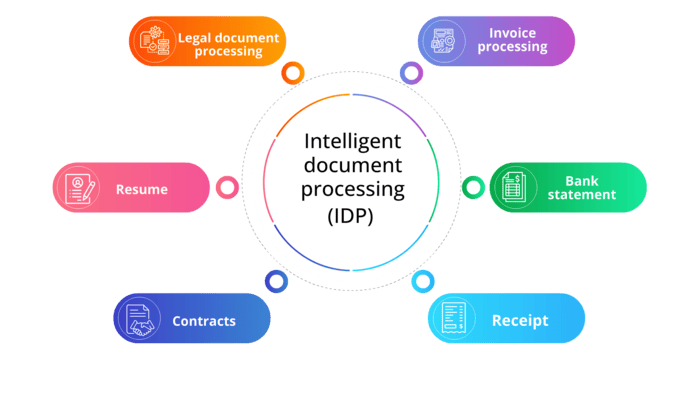
Traditional Data Capture Challenges
Manual data entry is time-consuming and error-prone. Organisations that use old processes face:
- High operational costs
- Low productivity
- Delays in data availability
- Risk of compliance issues
These inefficiencies are especially painful for industries that deal with huge amounts of paperwork like finance, healthcare and legal services.
What is Intelligent Document Processing (IDP)?
Intelligent document processing is the use of advanced technologies like OCR (Optical Character Recognition), machine learning, natural language processing (NLP) and robotic process automation (RPA) to extract, classify and process data from structured, semi-structured and unstructured documents.
Unlike traditional methods, IDP doesn’t just digitise documents — it understands and interprets them, enabling faster and smarter decision making.
How IDP Works: From Ingestion to Output?
IDP follows a multi-step approach to turn documents into usable structured data:
- Document Ingestion: Accepts files from various sources (emails, scans, cloud storage etc.).
- Preprocessing: Cleans and prepares documents (e.g. de-skewing, noise removal).
- Data Extraction: Uses OCR and NLP to extract relevant fields and information.
- Classification: Categorises documents based on content and layout.
- Validation: Applies business rules and human-in-the-loop review to ensure accuracy.
- Integration: Sends processed data to downstream systems like ERP, CRM, or databases.
Key Technologies Behind IDP
The power of IDP lies in the combination of several technologies:
- OCR: Converts printed or handwritten text into digital text.
- ML: Learns from historical data and user input to improve extraction accuracy.
- NLP: Understands human language, enabling context-aware extraction.
- RPA: Automates repetitive tasks and integrates with business applications.
These technologies make intelligent document processing tools highly flexible and efficient for complex document types.
Transforming Data Capture with IDP
Intelligent document processing solutions speed up data capture. For example:
- Invoices are read and routed for approval.
- Contracts are scanned, with key terms and clauses extracted for review.
- Insurance claims are processed without human intervention.
This reduces processing time from days to minutes and increases accuracy and compliance.
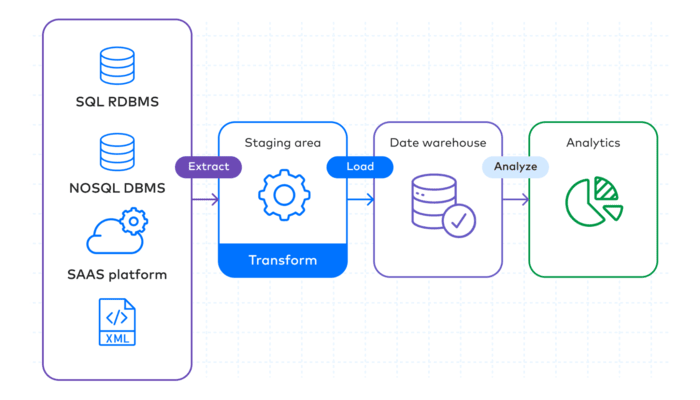
Automating Workflows with Intelligent Data Extraction
Once documents are captured and structured, IDP enables end-to-end automation:
- HR Onboarding: Extracts employee data from resumes, IDs and tax forms.
- Loan Processing: Gathers and verifies information from application forms and financial statements.
- Accounts Payable: Automates invoice matching, approval routing and payment processing.
Through integration with workflow engines and business software, IDP enables seamless automation from data input to task execution.
Real-World Use Cases of IDP in Action
Businesses across a range of industries are already using intelligent document processing platforms.
- Healthcare: Automating patient information extraction from handwritten notes and medical records.
- Banking: Processing loan applications and KYC documents.
- Logistics: Reading shipping labels, bills of lading and customs documents.
- Government: Digitising and processing tax forms and applications.
Each of these examples shows how IDP can be applied across various use cases and industries, making it a key part of digital transformation strategies.
Benefits for Businesses: Accuracy, Speed and Scalability
Implementing intelligent document processing software brings measurable benefits:
- Higher Accuracy: AI models learn from and improve extraction rates.
- Faster: Tasks that took hours or days are now done in seconds.
- Scalability: Processes thousands of documents without additional headcount.
- Cost Savings: Reduces manual labour and eliminates repetitive tasks.
- Compliance: Meets regulatory and legal standards.
These benefits combined improve decision-making, employee productivity and customer satisfaction.
The Intelligent Document Processing Market
The intelligent document processing market is booming, driven by AI adoption and digital transformation. Major players — AWS, IBM and Microsoft — are investing heavily in IDP. AWS intelligent document processing services like Textract offer cloud-native solutions that integrate with existing systems.
As demand grows, more intelligent document processing companies are emerging each with their own unique features for specific business needs.
Choosing the Right Intelligent Document Processing Software
When evaluating IDP tools, consider:
- Accuracy and Adaptability: Can the platform learn from user input?
- Integration: Does it support your current ERP, CRM or workflow tools?
- Security and Compliance: Are there built-in audit trails and access controls?
- Scalability: Can it handle your current and future document volume?
- User Experience: Is the interface intuitive and easy for teams to use?
Some of the best intelligent document processing software providers also offer trial versions or proof-of-concept pilots so you can test performance before a full rollout.
Using Intelligent Document Processing to Streamline Workflows
Intelligent document processing is more than a buzzword — it’s a technology that bridges the gap between unstructured data and streamlined workflows. By automating both data capture and business processes, IDP delivers tangible benefits in accuracy, speed and cost savings.
As the intelligent document processing market grows, forward-thinking companies should consider IDP solutions to stay competitive, agile and future-proof.
Whether you need intelligent document processing tools for high-volume document workflows or an intelligent document processing platform, now is the time to join the next generation of intelligent automation.
