

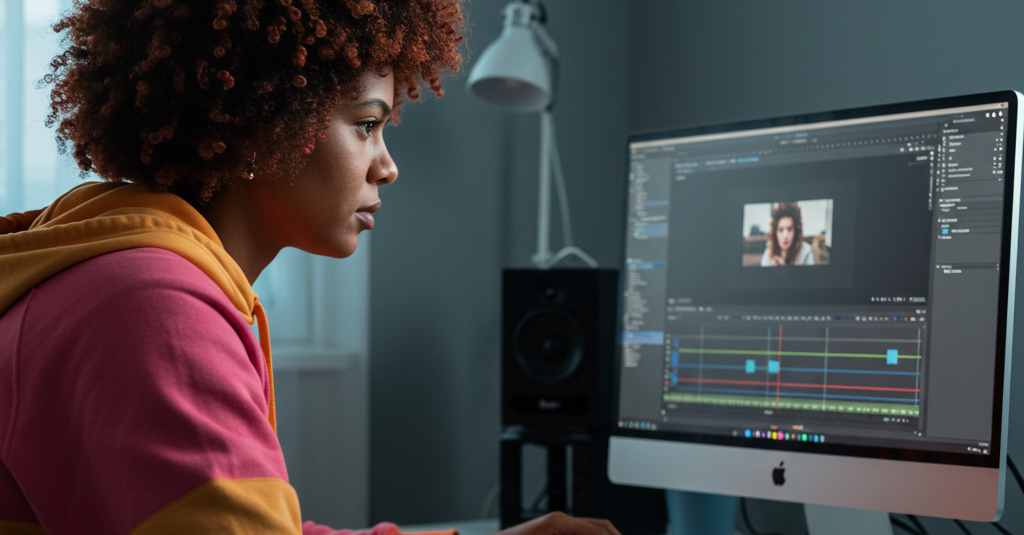
AI video generation is moving faster than almost anyone expected.
Companies like ByteDance, OpenAI, Google, Kling, Runway, and several newer labs are now competing to build the future of AI-generated video.
But this competition is not only about realism.
It is about creator ecosystems, production workflows, infrastructure power, and who becomes the default platform for future content creation.
I think this is what makes the AI video race so interesting right now.
Why the AI Video Race Is Accelerating So Fast
AI image generation exploded first. Video came next.
Once AI image models improved, the next logical step was motion. The problem was that video generation is much harder than image generation.
AI video requires:
- scene consistency
- realistic motion
- object tracking
- lighting continuity
- camera movement
- temporal understanding across frames
This needs huge computing infrastructure and advanced training systems.
At the same time, short-form content platforms increased demand for video faster than ever before.
Creators now need:
- TikTok videos
- Instagram Reels
- YouTube Shorts
- ad creatives
- Cinematic films
The internet is becoming more video-first every year.
This created massive pressure for AI labs to improve video generation quickly.
The result is what we are seeing now: an extremely competitive AI video industry moving at incredible speed.
The Main Companies Leading the AI Video Race
Several companies are clearly leading the market right now, but each one is competing differently.
Some focus on realism. Some focus on cinematic quality. Others focus on speed or creator accessibility.
ByteDance and Seedance 2.0

ByteDance has a huge advantage in AI video because they already understand short-form content behavior better than almost anyone.
TikTok gave them massive data about:
- Video input
- viewer retention
- viral pacing
- content structure
- visual engagement patterns
This matters more than people think.
Seedance 2.0 became one of the strongest AI video models because it combines realism with cinematic control. It supports image to video, text to video, and reference to video.
In my experience, Seedance 2.0 is currently the best models for:
- realistic human motion
- cinematic camera movement
- commercial-style scenes
- emotional lighting
- ad-quality visuals
It also handles movement consistency very well compared to many earlier AI video systems.
Another major advantage is cinematic direction. Many AI models can generate visuals, but fewer can generate scenes that feel intentionally directed.
Seedance 2.0 performs very well here.
This is one reason many creators and marketers are paying attention to it right now.
OpenAI and Sora
OpenAI approaches AI video differently.
Sora became famous because of its world simulation quality. Instead of only generating visuals, it tries to understand how scenes behave physically over time.
This improves:
- object interaction
- environmental consistency
- scene realism
- motion flow
OpenAI also benefits from ecosystem strength.
Because ChatGPT already has huge adoption, OpenAI can potentially connect text, image, and video workflows into one AI production system.
This ecosystem advantage may become extremely important later.
Right now, Sora still feels more research-focused compared to some creator-first video tools, but its long-term potential is massive.
Google Veo
Google has enormous infrastructure advantages.
Their AI systems already power YouTube, Search, Android, cloud systems, and massive data pipelines.
This gives Google strong positioning in AI video.
Veo 3.1 is one of the most realistic AI video systems right now. It performs especially well with:
- cinematic realism
- lighting quality
- long scene consistency
- environment detail
- natural motion
Google also benefits from YouTube integration potential.
If AI video becomes deeply integrated into YouTube workflows, Google could become one of the strongest players in creator infrastructure.
The biggest strength of Veo is visual realism. Some scenes look extremely close to professional video production.
Kling AI
Kling became popular very quickly because of motion quality.
Many AI video systems can generate impressive still frames, but motion is where problems usually appear.
Kling performs very well with:
- camera movement
- dynamic motion
- cinematic action
- realistic physics
- scene continuity
Kling O1 also became popular for editing workflows and refinement.
Instead of only generating videos from scratch, creators use Kling for:
- improving scenes
- refining motion
- extending shots
- polishing outputs
This made Kling attractive to creators who want more production control.
Its cinematic movement quality is still among the best in the market right now.
Other Important AI Video Labs
The AI video race is not limited to giant companies.
Several smaller labs are also moving very fast.
Runway
Runway helped popularize creator-friendly AI video workflows early.
It remains strong in:
- editing workflows
- creative tooling
- video refinement
- creator accessibility
Many filmmakers still use Runway during post-production workflows.
PixVerse
PixVerse became popular because of speed.
Fast generation matters more than many people realize because creators often test large numbers of concepts.
PixVerse works well for:
- social media content
- rapid experimentation
- fast iteration
- short-form production
Vidu
Vidu also focuses heavily on generation speed.
It allows creators to produce content quickly without waiting long rendering times.
This is especially useful for:
- marketers
- influencers
- daily content creators
Wan
Wan stands out because of creative stylization.
Its outputs often feel more artistic and visually experimental compared to realism-focused models.
Wan works well for:
- anime-style content
- artistic visuals
- stylized storytelling
- experimental content
Grok Imagine
Grok Imagine focuses more on creative interpretation and unique visual outputs.
It is less focused on pure realism and more focused on visually distinctive generations.
This makes it interesting for creators who want unusual or highly stylized aesthetics.
Which AI Video Models Lead Different Categories
One thing became very clear recently.
No single AI video model dominates every category.
Different models are strong in different areas.
Most Realistic Models
Right now, the strongest realism usually comes from:
- Seedance 2.0
- Veo 3.1
- Kling 3.0
These models perform very well with:
- lighting realism
- motion consistency
- facial quality
- cinematic scene structure
Among them, Seedance 2.0 currently feels especially strong for commercial cinematic output.
Best Cinematic Control
Cinematic direction is harder than simple generation.
Models that currently perform best here include:
- Seedance 2.0
- Kling O1
These models better understand:
- camera movement
- shot composition
- cinematic pacing
- dramatic motion
This matters a lot for filmmakers and ad creators.
Fastest Models
Generation speed is still extremely important for creators who test large amounts of content.
The fastest systems right now are:
- PixVerse
- Vidu
These tools are useful for rapid iteration workflows.
Most Creative and Stylized Models
Some creators care less about realism and more about visual uniqueness.
Wan and Grok Imagine perform especially well here.
They create outputs that feel:
- artistic
- stylized
- experimental
- visually different from mainstream cinematic models
Why No Single AI Video Model Dominates Everything
Every AI video model has tradeoffs.
A model optimized for realism may generate slower.
A fast model may sacrifice cinematic quality.
A stylized model may struggle with consistency.
This is why creators increasingly use multiple models instead of relying on one system.
A typical workflow now may look like this:
- one model for realism
- one for fast generation
- one for editing
- one for stylized scenes
This is also why multi-model platforms are becoming more important.
Instead of constantly switching between tools, creators want unified workflows.
Platforms like Loova AI help solve this by integrating many leading AI video models into one platform.
Creators can compare outputs, test styles, and switch workflows much faster.
The Real Competition Is Ecosystem Control
The AI video race is bigger than video generation itself.
The real battle is ecosystem control.
OpenAI wants integrated AI workflows connected to ChatGPT.
Google wants AI deeply connected to YouTube and search infrastructure.
ByteDance wants creator dominance through short-form content ecosystems.
Smaller labs compete through specialization and speed.
This means the future winners may not simply be the labs with the best visual quality.
The winners may be the companies that build the strongest creator workflows.
AI video generation alone is becoming less important than:
- workflow integration
- editing systems
- creator tools
- multi-model pipelines
- distribution ecosystems
This is where the industry is moving very quickly now.
How Creators Benefit From the AI Video Race
Competition is helping creators tremendously.
Every few months:
- generation quality improves
- costs decrease
- motion becomes smoother
- editing becomes easier
- cinematic quality increases
Small creators now have access to tools that previously required:
- production teams
- expensive VFX pipelines
- studio-level rendering systems
This lowers the barrier to cinematic content creation.
It also allows creators to experiment more freely.
The biggest winners may actually be independent creators because they gain production power without massive budgets.
Why Multi-Model AI Platforms Are Becoming Important
Most creators no longer want to depend on one AI model only.
Different projects require different strengths.
For example:
- realistic ads may need Seedance 2.0
- cinematic motion may need Kling
- stylized visuals may use Wan
- rapid testing may use PixVerse
Managing all these systems separately becomes inefficient.
This is why platforms like Loova AI are becoming useful for creators.
Instead of switching platforms constantly, creators can:
- access multiple leading models
- compare outputs faster
- simplify workflows
- reduce production friction
This becomes more valuable as the AI video ecosystem becomes more fragmented.
What the Future of AI Video Labs Looks Like
AI video is still early.
The next stage will probably focus on:
- real-time generation
- longer scene consistency
- stronger editing control
- AI-native filmmaking workflows
- interactive cinematic generation
Future AI systems may allow creators to direct scenes almost like real film production.
Instead of generating isolated clips, creators may control:
- camera paths
- scene continuity
- actor consistency
- lighting systems
- emotional pacing
The future race may shift away from pure generation quality and toward production infrastructure.
Whoever builds the best creator workflow may eventually lead the market.
FAQs
Which company has the best AI video model?
There is no single winner right now. Different models perform best in different categories like realism, speed, cinematic control, or stylization.
What is the most realistic AI video model?
Seedance 2.0, Veo 3.1, and Kling 3.0 are currently among the strongest realism-focused AI video models.
Which AI video model is fastest?
PixVerse and Vidu are known for very fast generation speed.
Why are AI video models improving so quickly?
Competition between major AI labs is accelerating research, infrastructure investment, and creator-focused development.
Why are creators using multiple AI video models?
Different models have different strengths. Many creators combine models for realism, cinematic quality, editing, and stylized outputs.
What is Loova AI?
Loova AI is a platform that integrates multiple leading AI video and image generation models into one workflow for creators.
