

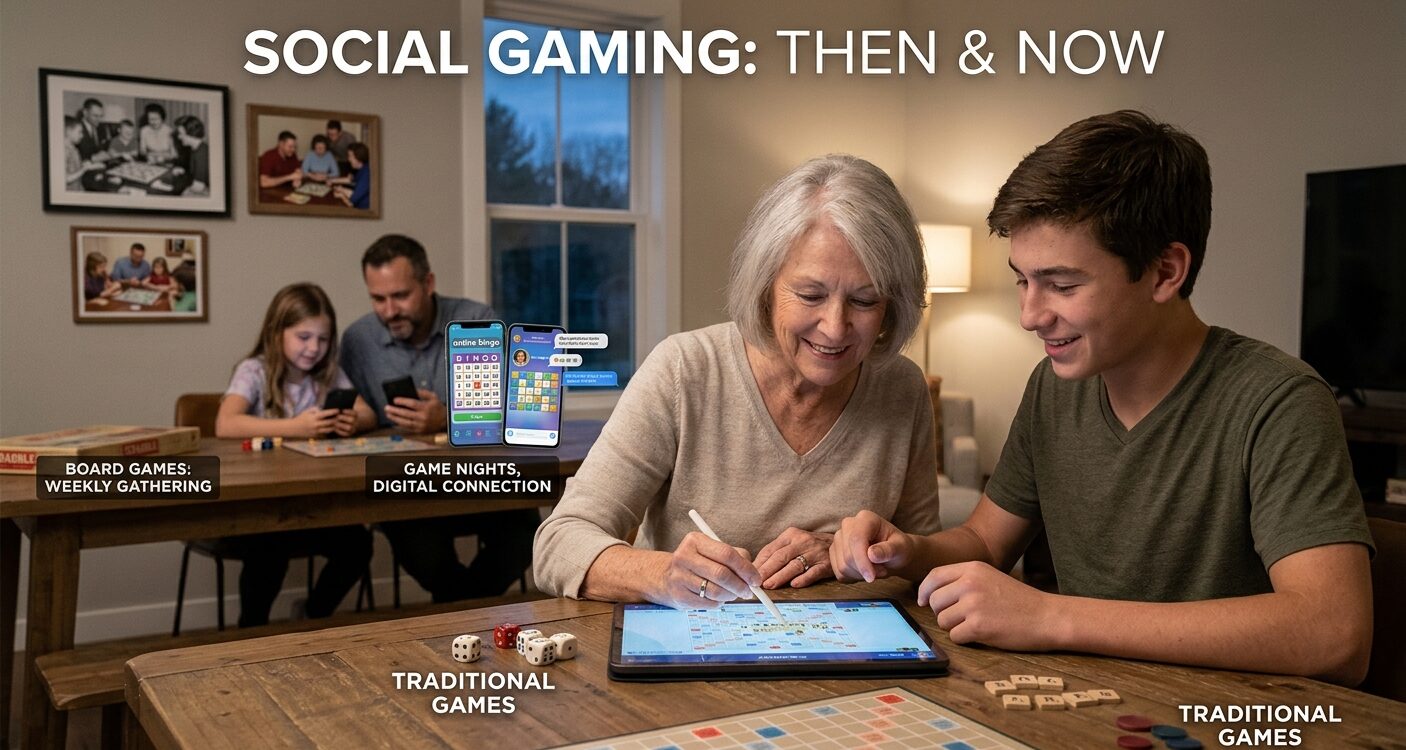
Gaming has changed over the years. While plenty of us still gather around a board game or deal physical packs of cards between friends, a lot of this physical play is increasingly available on our devices.
But how did we get here? And what does all the new tech mean for social gaming?
Why traditional board games brought people together?
Weekly family game nights were once a staple in the calendar. Parents would break out the games board and set up the dice and tokens.
For classic games like Scrabble, the rule book and a dictionary were a must, while everyone knew what to do for others.
These physical gatherings meant face-to-face interaction and conversations about strategy that created room for conversation. They eased generational divides as grandparents played alongside teenagers.
The digital revolution and the rise of online social gaming
While we still play these more traditional games and enjoy in-person game nights, they tend to be during specific gatherings like Christmas or during rainy bank holidays rather than as the set fixture in the timetable. And the reason? Everyone went digital.
As home broadband expanded across the UK, the tiny family gatherings around the kitchen table morphed into a global network.
Digital technology removed geographic barriers entirely. Online platforms suddenly allowed you to challenge distant relatives or team up with strangers for tournaments without leaving your sofa.
When smartphones entered the market, downloadable apps accelerated this trend. Instead of waiting for Friday night to head to the bingo hall, you could bring the hall to you by accessing an online bingo site.
How mobile apps are shaping the future of social entertainment?
Today, mobile apps fit social gaming directly into the rhythm of your busy schedule. Modern developers design sleek, intuitive interfaces that let you jump into quick matches during a commute or play daily word puzzle games with friends from other cities – and time zones.
This flexibility provides entertainment whenever you find a spare five minutes. Looking ahead, developer focus continues to move towards personalizing experiences and providing seamless cross-platform play, ensuring your progress follows you across every device you own.
But while technology might be reshaping how we enjoy games in social settings, at its core is the idea of connection. Playing both physical, tactical board games and their digital equivalent will always create commentary and communication with others.
