

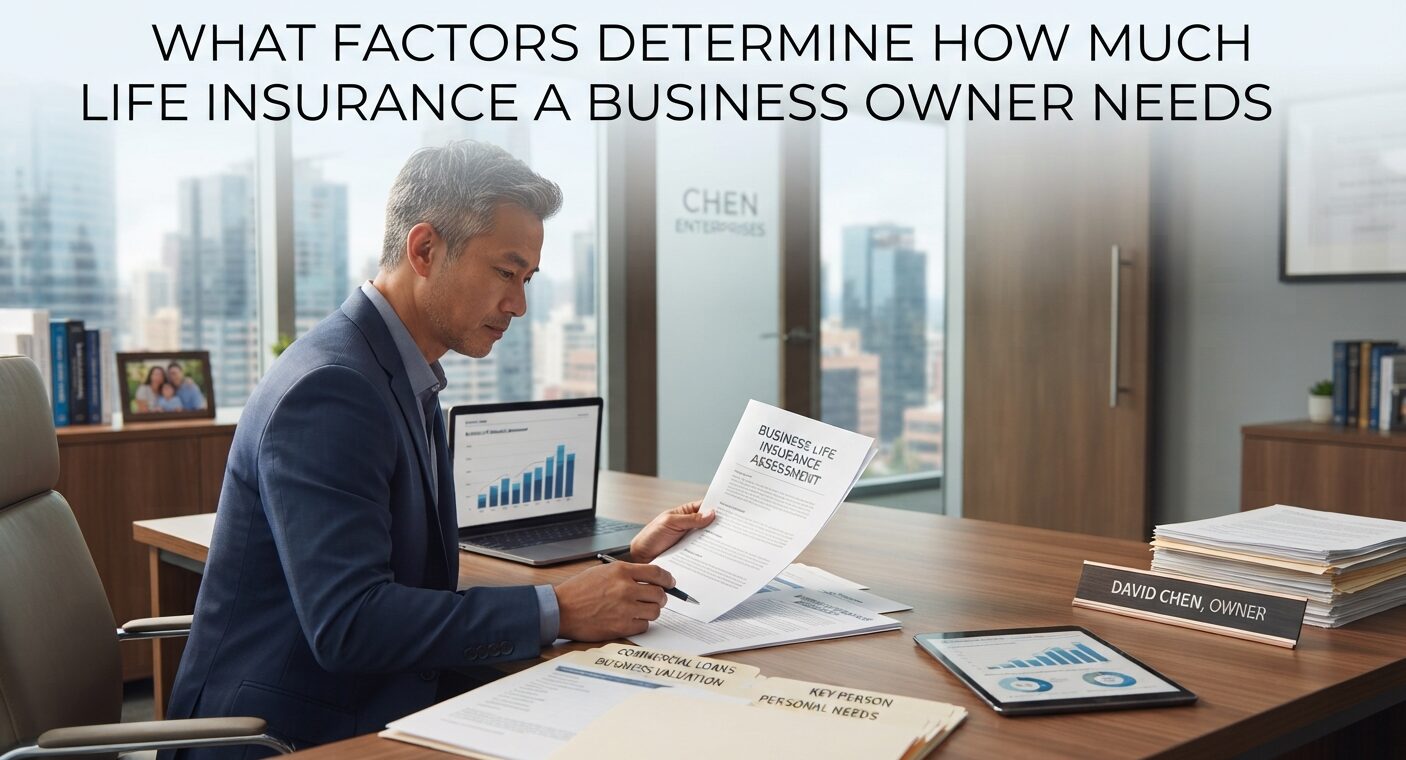
Life insurance is a tool for protecting the financial interests of a business owner – this is true when a company relies on the specific expertise or financial inputs of that owner.
An unexpected death is a cause of difficulty for partners, staff, clients and relatives. Coverage is a source of funds to pay debts, maintain daily functions and facilitate transitions in ownership.
Commercial Debts & Financial Obligations
The total debt of a company is a primary factor in these calculations. Owners frequently use commercial loans, equipment financing or mortgages.
Many of these contracts include personal guarantees. The estate of the owner is liable if the company cannot pay. Insurance proceeds are a way to settle the balances and lower pressure on surviving partners.
Commitments beyond traditional loans are also relevant, which include equipment leases, supplier contracts, rent and payroll.
A profitable company is often subject to cash flow problems after an owner dies. Sufficient coverage is a financial buffer while the company moves toward new leadership.
Business Valuation & Ownership Interests
The total monetary value of the company is another consideration. Owners with significant equity require enough insurance to fund the sale or transfer of their interest – this is useful when multiple shareholders want to retain control.
Without these funds, surviving owners are often unable to buy the shares of the deceased, which leads to forced sales or the entry of unknown stakeholders.
Professional valuations establish the amount of coverage necessary for transitions. Profit, assets and liabilities are the metrics that define value.
Owners must review their policies as the company grows or changes its structure, including whether term life insurance Canada coverage remains sufficient. A policy from multiple years ago is often insufficient if the company is now more valuable.
Income Replacement & Family Needs
Companies are often dependent on an owner to generate revenue and manage daily tasks. If an owner dies, the company is at risk of lower income while staff attempt to maintain operations.
Life insurance is a method to replace lost financial contributions – this gives the company time to find new leaders or create a succession plan.
Personal financial duties also dictate the level of coverage. Owners often have mortgages and household costs. If relatives depend on the income from the company, the policy must meet those specific needs.
Separation of personal and professional coverage is a way to ensure both the company and dependents are secure.
Key Employees & Continuity
Success is often tied to a few individuals with specialized knowledge or professional relationships. The loss of a manager or technical expert is a threat to productivity and revenue.
Owners use key person insurance to provide support if an essential staff member dies. The money is used for recruitment, training and covering temporary losses.
Risk levels depend on how difficult it is to replace a specific person. A company with many managers is at lower risk than a small firm that relies on one individual for all decisions. Evaluation of these risks is how owners decide if they need more than basic debt coverage.
Available Financial Resources
Current assets are part of the calculation before a new policy is bought. Owners often have personal life insurance, group benefits or investment accounts.
Some assets are not suitable for use after a death. Retirement funds and operational reserves are often restricted. Reviewing the resources is a way to avoid paying for unnecessary coverage.
Ownership of the policy is also an important detail – Personal policies pay designated beneficiaries, while business policies are for specific company needs.
Owners must know who receives the funds and how they are used. Coordination with legal professionals is a way to ensure the policy matches existing shareholder agreements.
Regular Reviews
Insurance needs are subject to change as a business grows – Expansion, new staff, more debt or new partners are factors that increase financial risk.
Owners are encouraged to review coverage when changes occur. Regular checks ensure the protection is equal to the current financial state of the company.
Conclusion
Calculating the insurance needs of a business owner is more than a simple income estimate. Valuation, ownership structures and family duties are all relevant factors.
By looking at these together, owners gain a clear view of their risks. Adequate insurance is a foundation for stability during a transition.
