

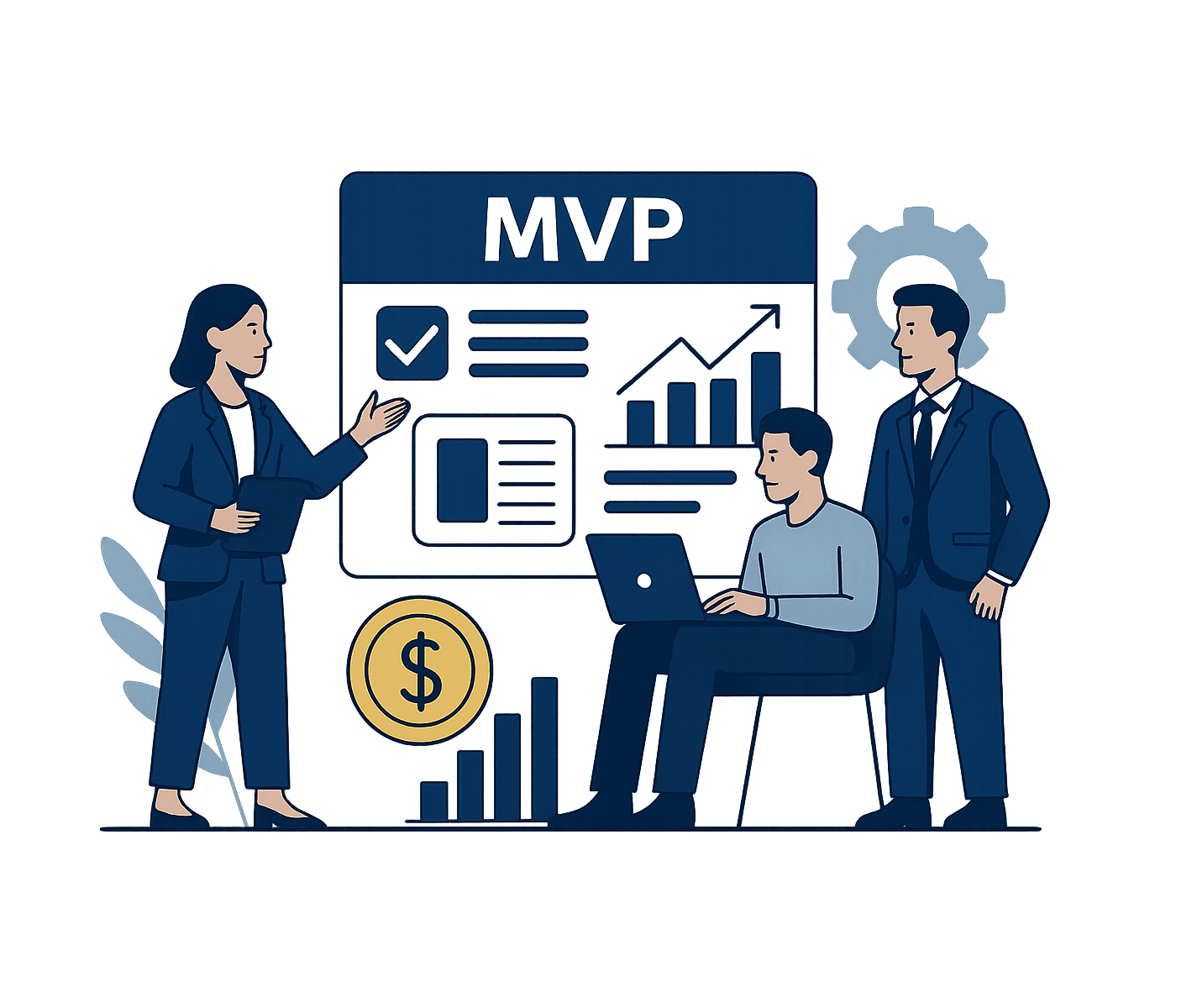
An MVP can prove that customers want AI summaries, personalized insights, or portfolio explanations. It cannot prove that those features remain safe when market data shifts, usage climbs, and support teams face unfamiliar complaints.
For a mid-sized company, the production challenge rarely starts with model quality. It starts when one model response touches customer identity, account data, disclosures, alerts, or investment decisions. A sound stock investment app development plan treats AI as one controlled service within a wider product system.
Regulators have made that boundary important. The SEC’s fiscal 2025 examination priorities cover advisers’ use of AI in portfolio management, marketing, compliance, and disclosures.
FINRA’s 2025 oversight report addresses generative AI and third-party risk. Neither signal calls for an enterprise-sized control program. Both demand clear evidence of supervision.
Production Changes the Risk Equation
Prototype teams judge AI through demos and selected prompts. Production teams must judge it through failure modes.
A fluent answer can cite stale prices, mix customer context, overstate certainty, or omit a disclosure. Each error can create support costs, complaint volume, and review work.
The architecture should separate explanation from authority. Deterministic services should own balances, prices, holdings, calculations, eligibility rules, and permissions. The model can translate approved facts into plain language, but it should never invent those facts or change their source.
A policy layer should inspect every request before the model receives it. That layer can remove sensitive fields, enforce product rules, attach approved context, and block unsupported requests.
The response path should check source freshness, required disclosures, and prohibited claims before the customer sees an answer.
Each explanation should expose its data time, source, and limits. When approved evidence runs out, the system should decline the request rather than fill the gap with plausible language.
This design gives teams a useful control point. Engineers can change a model without rewriting account services. Compliance owners can change a rule without changing prompts across the product. Product leaders can test value while limiting exposure.
Release AI Through Risk Tiers
The first production release should start with research content that does not use account context. The next stage can add personalization for a small customer cohort without allowing account changes. Features that shape alerts, recommendations, or customer actions should face stricter review and smaller release groups.
Feature flags and kill switches need named owners. A fallback experience should return approved content or a human support path when the model, data feed, or policy service fails. That path protects conversion because customers receive a useful response instead of an error screen.
Scale Controls With the Product
AI observability must connect model behavior to customer impact. Teams should capture the model version, prompt version, approved data sources, policy decision, response time, customer feedback, and escalation outcome under one trace identifier. Logs should exclude secrets and limit customer data.
Support data adds context. Teams should classify complaints by source error, policy error, wording, or user expectation. That view helps engineers fix the right layer.
This work belongs in the product backlog. A Mobile app development program that treats audit evidence as a release output can avoid a later scramble across cloud logs, support tickets, and vendor dashboards.
Engagement cannot serve as the main AI success metric. Teams should track unsupported claims, stale data exposure, blocked requests, customer corrections, support escalations, policy latency, and rollback time. These measures show whether scale increases customer risk.
Vendor governance needs the same focus. Contracts should define data retention, model training rights, incident notice, region controls, subcontractors, and exit terms. Engineering teams should test provider failure and model replacement before a live incident forces that work.
Give Every Failure an Owner
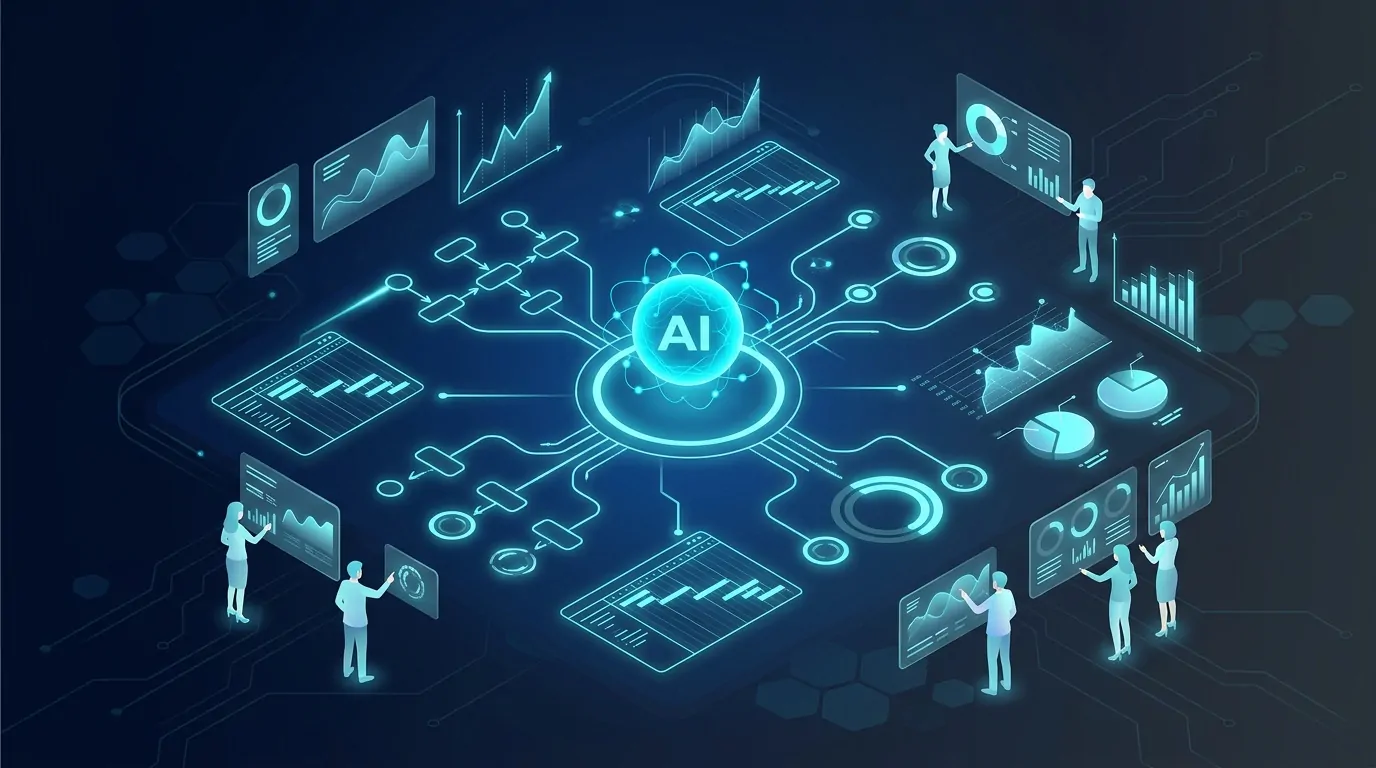
Mid-sized teams do not need a large AI council. They need a small decision group with product, engineering, security, compliance, and customer support ownership. That group should approve risk tiers, release gates, escalation rules, and rollback authority.
An incident rehearsal can test the operating model. The team can simulate a stale data feed, a model change, or a wave of unsupported answers.
The exercise should expose who detects the issue, who stops the feature, who reviews affected sessions, and who communicates with customers.
5 U.S. Engineering Partners for Building Stock Investment Apps
The following shortlist uses current Clutch ratings and verified review counts. Ratings offer one input, not a substitute for technical diligence, security review, reference calls, or a scoped architecture workshop.
1. GeekyAnts
GeekyAnts is an AI-Powered Digital Product Engineering & Consulting Company. Its work spans financial mobile products, AI systems, cloud modernization, product design, and platform engineering, which fits teams moving from MVP validation to controlled production scale.
Clutch rating: 4.8 from 116 verified reviews. GeekyAnts Inc, 315 Montgomery Street, 9th and 10th floors, San Francisco, CA, 94104, USA. Phone: +1 845 534 6825. Email: [email protected]. Website: www.geekyants.com/en-us.
2. Crowdbotics
Crowdbotics focuses on custom software, mobile products, application management, and AI-supported software modernization. Its reusable code approach may suit teams that need to map an existing application before changing core services. Buyers should test delivery governance and milestone ownership during discovery.
Clutch rating: 4.4 from 42 verified reviews. Address: 2081 Center Street, Berkeley, CA 94704, USA. Phone: +1 510 399 1776.
3. Appsnado
Appsnado provides mobile, web, custom software, API, AI, and product design services. The mix can support funded startups that need one delivery team across customer experience and backend integration. Its Clutch feedback signals a need to confirm project management continuity in the contract.
Clutch rating: 4.2 from 37 verified reviews. Address: 309 Fellowship Road, Mount Laurel Township, NJ 08054, USA. Phone: +1 609 201 3453.
4. Techbinder App
Techbinder App works on mobile products, AI development, APIs, web systems, and financial services use cases. Its profile suits smaller MVP programs that need a compact delivery scope and direct access to the build team. The limited review base makes reference checks important.
Clutch rating: 4.5 from 1 verified review. Address: 7901 4th Street North, Suite 300, St. Petersburg, FL 33702, USA. Phone: +1 786 869 8850.
5. Blue Rocket
Blue Rocket combines product strategy, user experience, mobile engineering, backend integration, and financial services experience.
Its work can fit teams that need product definition before a complex production build. Its project minimum and small review base warrant budget and reference checks.
Clutch rating: 4.5 from 1 verified review. Address: 233 Sansome Street, 11th Floor, San Francisco, CA 94104, USA. Phone: +1 415 638 9757.
Final Thoughts
AI scale creates customer risk when a team lets model output cross product boundaries without controls. The safer path keeps account facts deterministic, places policy checks around every model interaction, releases features through risk tiers, and measures harmful failures alongside engagement.
The goal is not a large governance program. It is a product system that gives each risk an owner, each release an evidence trail, and each incident a tested response.
A short architecture and risk consultation can expose gaps before usage makes them expensive, while giving leaders a focused plan for the next production release.
