


A trading platform can look impressive during a quiet market and behave differently when prices move. Charts may load cleanly and the headline spread may appear competitive.
The real test comes when a trader tries to modify a stop during a fast release, check a fill price or work from a weaker mobile connection.
That gap makes choosing a platform less about collecting the longest feature list. A day trader needs responsive execution and intraday data. Long-term investors may care more about research, reporting and access to stocks and ETFs.
The key features to look for go well beyond a polished landing page.
1. Reliable Trade Execution and Transparent Records
Execution quality is where an online trading platform meets the market. An order sent at one price may be filled at another when liquidity changes, especially around major economic releases or periods of thin trading.
That difference, known as slippage, can be positive or negative. Rejected orders, requotes and unexplained delays are more troubling when they occur repeatedly.
A platform records the requested price, executed price, order time and any associated charge. Those details allow a trader to distinguish normal market movement from a recurring execution problem. They also matter when trading strategies depend on small price changes.
Oleksii Dubovyk describes the bridge behind the visible interface as critical infrastructure:
“It aggregates quotes, routes orders, manages latency, and applies smart order routing logic.”
Head of Trading at Versus Trade—Oleksii Dubovyk, Finance Magnates interview, February 5, 2026.
Oleksii links weak infrastructure with slippage, requotes and delayed execution.
2. Real-Time Market Data With Clear Pricing
A live-looking screen doesn’t always mean every quote is real-time. Stock exchange data may be delayed unless the user subscribes to a feed, while prices for forex or CFDs can come from the broker’s own liquidity arrangements. The source, delay status and subscription cost deserve more attention than the number flashing on screen.
Market data also includes bid and ask prices, trading volume where available, session highs and lows, and an economic calendar. News feeds add context, but speed without attribution can create noise. Timestamps and named sources make market analysis easier to verify.
External tools may still fill gaps. Connection Cafe’s 10 Best Tools for Traders in 2026 covers specialist options for charting, screeners, order flow and backtesting.
A platform doesn’t need to reproduce every one of them, but exporting data or connecting compatible analytics can prevent the trading account from becoming a closed system.
3. The Best Features Begin With Useful Order Types
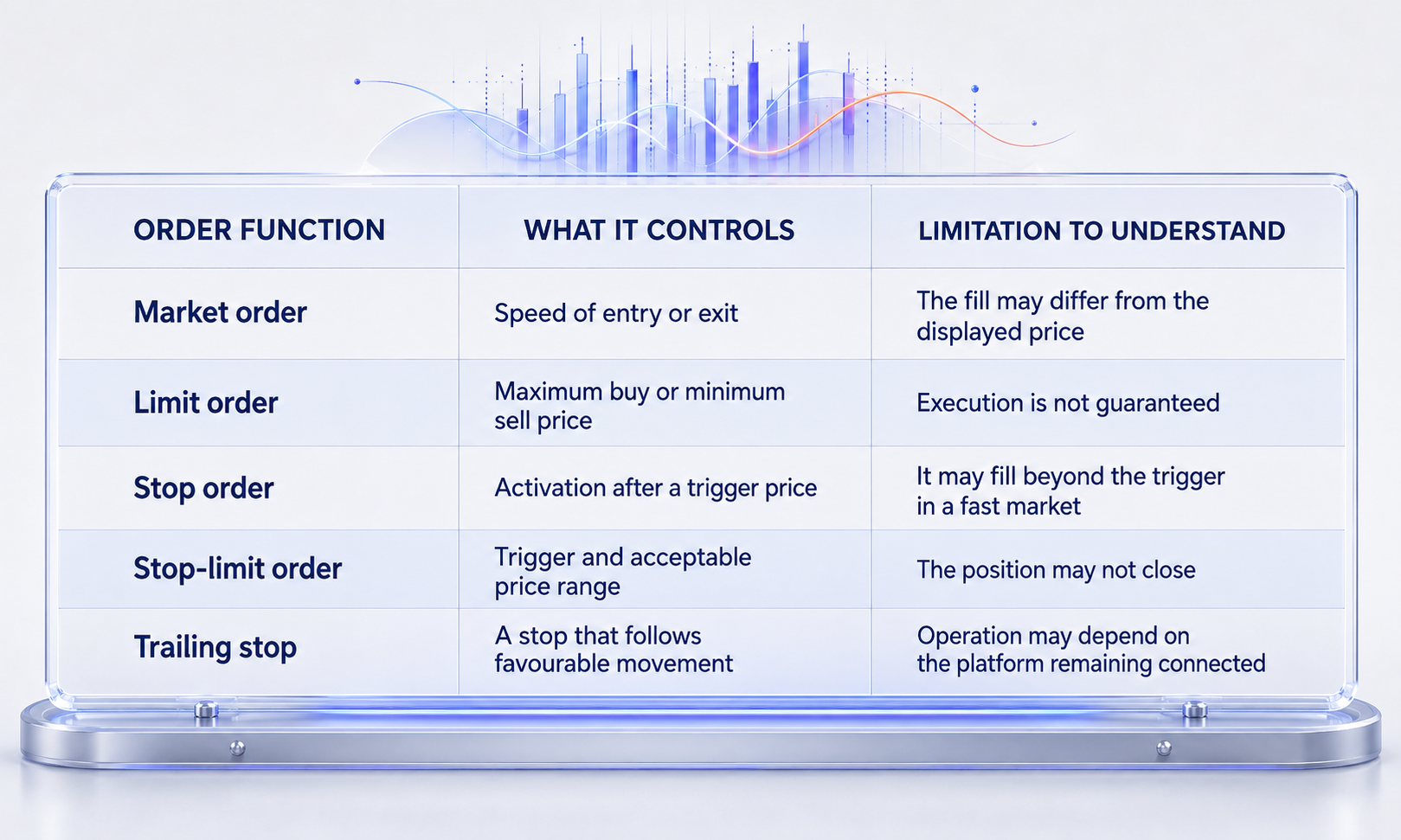
Market and limit orders cover basic buying and selling, but they don’t cover every decision. Stop orders, stop-limit orders, trailing stops and take-profit instructions give traders more control over entry, exit and risk. Availability varies by asset, broker and market venue. A variety of order types matters when you need to buy and sell with precision.
The labels alone aren’t enough. A stop order generally becomes a market order once triggered, so its final price is not guaranteed. A stop-limit order controls the acceptable price but may remain unfilled. Good order tickets show that distinction before submission.
4. Trading Software That Matches the Trader
The strongest user interface is the one that keeps frequent actions clear while allowing less common tools to stay out of the way.
Saved layouts, searchable instruments, custom watchlists and confirmation settings reduce friction without hiding the mechanics of a trade. That kind of personalised trading setup takes time to build, but it pays off during active sessions.
Types of trading platforms differ in depth. Desktop software may support algorithmic trading, custom indicators and heavier charting. A browser version offers access without installation.
A trading app suits monitoring and urgent position management, although a small screen can make complex technical analysis less comfortable. Popular trading platforms for day trading often pair a full desktop terminal with a lightweight mobile app for price checks and order tweaks.
Platform choice also extends beyond the terminal. The Versus Trade trading platform provides an example of a multi-device setup centred on MetaTrader 5, with desktop, browser and mobile access. The relevant test for any provider is consistency across devices: watchlists, open positions and account information should match everywhere.
5. A Web Platform and Mobile App That Can Stand Alone
A web platform is sometimes treated as a lighter copy of desktop trading software. Core functions should still remain available in the browser, including order modification, account history and chart settings.
The mobile app matters for a different reason. Open risk doesn’t disappear when the desktop is out of reach. Biometric login, price alerts and clear position controls can make the mobile app a practical backup. Push notifications aren’t a substitute for server-side stop-loss instructions because they can arrive late.
6. Analysis Tools Without Indicator Clutter
More technical indicators don’t automatically produce better investment decisions. Moving averages, momentum measures and volatility tools often overlap.
Responsive charts, saved settings and easy comparison between time frames matter more. You want a range of technical indicators available, but you don’t need all of them on screen at once.
Vitalii Bulynin connects the development of analytical tools with a broader technological shift:
“When MetaQuotes introduced MQL, traders suddenly had the opportunity to build their own indicators and Expert Advisors. Today, AI is taking that evolution even further.”
Co-founder and CEO of Versus Trade—Vitalii Bulynin, interviewed by FXStreet, July 30, 2026.
New technology can shorten the path from an idea to a test, but a larger toolkit doesn’t automatically produce a stronger market thesis.
Long-term investors may need financial statements and investment research. Cryptocurrency trading can require round-the-clock alerts, while forex traders often work around an economic calendar. Crypto trading and forex both demand real-time awareness, but the analysis tools each group relies on look quite different.
7. Risk Management Built Into the Order Flow
Risk management becomes easier when it’s visible before an order is placed. Position-size calculators, margin estimates and account alerts translate exposure into numbers. Free margin and liquidation thresholds also need clear definitions.
These controls can’t remove market risk. Stop orders can execute at worse prices during gaps, and borrowed money can magnify losses as quickly as gains. Broker warnings often state that retail accounts lose money when trading CFDs, but the published percentage is provider-specific and can change.
8. Paper Trading That Resembles the Live Account
Paper trading is useful when it reproduces the platform workflow: selecting an instrument, sizing a position, placing several order types and reviewing the result. It’s less useful when virtual fills are unrealistically smooth or the available instruments and account conditions differ from live trading.
A demo trading account gives a prospective user room to test navigation and practise without putting capital at risk. It can’t reproduce the emotional pressure of a live loss, and simulated execution may not capture slippage, liquidity constraints or every fee.
That limitation doesn’t make a demo unhelpful. It defines what the test can prove: that the tools and workflow fit the user, not that a strategy will be profitable.
Educational content helps when it explains order behaviour, borrowed money and platform mechanics. Generic market predictions are a weaker substitute for learning how the account works.
9. Total Costs, Security and Broker Oversight
Low fees can be difficult to compare because costs arrive in different forms. Spreads, commissions, overnight financing, data subscriptions, currency conversion and withdrawal charges affect strategies differently. An active trader feels the spread repeatedly, while overnight costs matter more over longer holding periods.
Two-factor authentication, login alerts, withdrawal verification and session controls reduce account-level risk. The provider should state which legal entity holds the account, which regulator oversees it and how client money is treated. A familiar software brand doesn’t regulate the broker using it.
For Malaysian users, a provider’s claims can be checked through the Securities Commission Malaysia’s Investment Checker, public register and Investor Alert List. The alert list is not exhaustive, so absence from it doesn’t establish authorisation. Availability through an app store or a familiar trading interface doesn’t establish regulatory status either.
Choosing the Right Trading Platform Is a Workflow Test
Selecting the best trading platform rarely turns on one charting tool or promotional spread. Execution records show what happened to an order. Market data, risk controls and transparent costs reveal how well the full workflow operates.
The top features to look for are the ones that remain useful on an ordinary trading day and dependable on a difficult one. A platform that fits your trading style, instruments, holding period and working devices has more practical value than one built around the largest possible menu.
Saxo Bank and Fidelity Investment each deliver a different trading experience, and that’s the point: the right platform for one trader can feel wrong for another.
The final choice belongs to the full setup: software, broker, account terms and regulatory status working together. When you evaluate a platform for investing, skip the marketing and test the workflow.
The best platform is the one that lets you execute trades cleanly, review your fills, and manage risk without friction. That’s what you’re really looking for.
By Evgeniya Romanova—Head of Recruitment at Versus Trade
